
How to Compare Micro Pump Suppliers: Price, Quality and Long-Term Value
How to Compare Micro Pump Suppliers: Price, Quality and Long-Term Value
When sourcing micro pumps for OEM equipment, buyers often receive quotations from several manufacturers or suppliers. At first glance, comparing them may seem straightforward: check the unit price, delivery time and product specifications, then choose the most competitive offer.
However, two micro pumps with similar advertised specifications may differ in internal design, materials, motor configuration, performance under actual operating conditions and quality control processes. These differences can affect equipment performance, production consistency and long-term purchasing costs.
A practical Micro Pump Supplier Comparison should therefore go beyond the quotation. Buyers need to evaluate product suitability, quality, engineering support, customization capability, delivery reliability and the supplier’s ability to support future orders.
This guide explains seven important factors to consider when comparing micro pump suppliers for OEM projects.
Why Micro Pump Supplier Comparison Is More Than Comparing Prices
A quotation only represents the commercial offer based on the specifications and conditions provided. It does not automatically show whether the proposed pump is suitable for the equipment or whether the supplier can maintain consistent quality over repeated orders.
For example, two suppliers may quote a centrifugal water pump with similar maximum flow rates. However, their actual performance at the required operating pressure may differ. They may also use different wetted materials, motor configurations or connection designs.
Other differences may include:
Product structure and component specifications
Performance testing methods
Quality inspection requirements
Customization scope
Minimum order quantities
Production lead times
Warranty and after-sales arrangements
Before comparing prices, make sure that all suppliers are quoting against the same technical requirements. Otherwise, a lower quotation may simply represent a different product configuration.
7 Key Factors for Comparing Micro Pump Suppliers
1. Product Specifications and Actual Performance
The first step is to confirm that each supplier is offering a pump that meets the equipment’s operating requirements.
Do not compare products using only their maximum flow rate or maximum pressure. These values may not occur at the same operating point.
Important parameters include:
Required flow rate at the working pressure
Operating pressure and maximum allowable pressure
Liquid or gas handling requirements
Operating temperature
Motor type and supply voltage
Inlet and outlet dimensions
Installation dimensions
Duty cycle and operating mode
For centrifugal pumps, review the performance curve and consider the resistance of the complete fluid system.
For diaphragm pumps, confirm whether the proposed configuration is intended for liquid or gas handling. For air applications, positive-pressure and vacuum capabilities should be checked for the specific model.
For magnetic drive gear pumps, evaluate flow requirements together with liquid viscosity, material compatibility and operating pressure.
A fair supplier comparison begins with equivalent technical requirements, not just similar product names.
For a more detailed explanation, see our guide to Micro Pump Flow Rate and Pressure.
2. Product Quality and Reliability
Product quality should be evaluated through specifications, manufacturing controls and actual performance verification.
When comparing suppliers, ask about:
Key component specifications
Wetted material options
Motor and electrical configuration
Assembly and inspection procedures
Performance testing before shipment
Product traceability, where applicable
Quality issue handling and corrective actions
A supplier should be able to explain how its products are inspected and how potential quality problems are investigated.
It is also important to distinguish between a supplier’s stated quality procedures and independently verified certifications. If a supplier claims compliance with a particular quality standard, ask for the relevant certificate and check its scope and validity.
Reliability should not be judged solely by motor type or a general service-life statement. Pump life depends on the complete design, including moving components, seals, valves, materials and actual operating conditions.
Our article on Micro Pump Reliability and Service Life explains these factors in more detail.
When reviewing a supplier’s quality management system, buyers may also refer to the ISO overview of quality management systems. A quality management system provides a framework for managing processes and continual improvement, but certification alone does not guarantee that every individual product will meet a buyer’s specific requirements.
3. Sample Testing and Mass Production Consistency
A sample that works well is a useful starting point, but it does not automatically prove that future production batches will perform identically.
For OEM projects, buyers should evaluate both sample performance and the supplier’s ability to maintain consistency during mass production.
A practical process may include:
Confirm the technical requirements and acceptance criteria.
Test samples under representative operating conditions.
Record important performance results.
Confirm the approved product configuration.
Discuss how production units will be inspected.
Establish a process for handling deviations or quality issues.
For example, if a pump is intended to operate continuously in a cooling system, testing should reflect the expected operating conditions as closely as practical.
If the pump handles a chemical liquid, compatibility should be evaluated using the actual fluid or a technically appropriate test method.
Buyers should also clarify whether any changes to materials, components or manufacturing processes will be communicated before implementation.

4. Technical Support and Engineering Capability
A suitable supplier should be able to understand the equipment application rather than simply recommend a model based on one parameter.
Technical support is especially important when the buyer has incomplete specifications or is developing a new product.
Useful questions include:
Can the supplier help identify a suitable pump type?
Can it review the required flow and pressure?
Can it assess liquid or gas compatibility?
Can it review installation dimensions and connections?
Can it help investigate performance problems during testing?
Can it communicate technical limitations clearly?
For example, a compact water circulation system may require a centrifugal pump, while a gas sampling device may need a diaphragm pump. A magnetic drive gear pump may be considered for certain liquid transfer applications.
The supplier should explain why a particular pump technology is suitable and what conditions still need to be verified.
Clear technical communication can reduce unnecessary sample changes and shorten the development process.
5. OEM Customization and Flexibility
Standard pump models can meet many requirements, but OEM equipment sometimes needs specific configurations.
Depending on the pump model and engineering evaluation, customization may involve:
Flow rate or pressure requirements
Motor type and voltage
Wetted materials
Inlet and outlet connections
Mounting dimensions
Cable length and connectors
Operating mode and control requirements
Not every supplier offers the same customization scope. More importantly, not every requested change is technically or commercially feasible.
When comparing suppliers, ask which options are already available, which require engineering evaluation and whether any changes may affect cost, lead time or minimum order quantity.
Also clarify how approved specifications will be documented and maintained for repeat orders.
For more information, see Micro Pump Customization for OEM Applications.
6. Production Lead Time and Delivery Reliability
A competitive quotation is less valuable if the supplier cannot deliver according to the equipment manufacturer’s production schedule.
Compare more than the estimated lead time for the first order.
Consider:
Sample preparation time
Production lead time
Component availability
Minimum order quantity
Production planning for repeat orders
Packaging and shipping arrangements
Communication when delays occur
Buyers should distinguish between a supplier’s quoted lead time and its demonstrated delivery performance.
For a new project, it is also useful to understand whether the supplier can support a gradual increase in order volume as the equipment moves from development to mass production.
Do not assume that a supplier with a short sample lead time can automatically provide equally short lead times for large repeat orders.
For manufacturers looking to strengthen their supply chains, the NIST Manufacturing Extension Partnership provides resources and support related to manufacturing competitiveness, supplier development and supply chain resilience.
7. Communication and Long-Term Cooperation
Communication quality can have a direct impact on OEM project efficiency.
During the quotation and sample stages, observe whether the supplier:
Responds clearly to technical questions
Identifies missing information
Explains product limitations
Provides realistic delivery estimates
Follows up on sample feedback
Communicates specification changes
Handles quality concerns professionally
A supplier that gives a low quotation but cannot clearly explain the proposed configuration may create additional work during development and production.
For long-term cooperation, buyers should also understand the commercial terms, warranty scope, spare parts availability where relevant, and the process for handling future product changes.
How to Understand Price Differences Between Micro Pump Suppliers
Price differences do not necessarily mean that one supplier is more expensive for the same product.
Before comparing quotations, check whether the products have equivalent specifications and supply conditions.
Common reasons for price differences include:
Motor configuration
Different motor designs, electrical specifications and control requirements can affect product cost.
Wetted materials
Pump chamber materials, diaphragms, valves, seals and other wetted components may have different costs and compatibility characteristics.
Performance requirements
A pump designed for a particular flow-pressure working point may require a different configuration from a standard model.
Customization
Special connections, mounting arrangements, wiring or other OEM requirements may increase engineering and production costs.
Quality and testing requirements
Additional inspections, performance testing, documentation or project-specific acceptance criteria may affect the quotation.
Order quantity and commercial conditions
Unit prices may vary with order volume, packaging, payment terms and delivery arrangements.
The correct approach is to ask each supplier to clarify the quoted configuration and identify what is included in the price.
A lower price may be attractive, but it should be evaluated against the actual technical and commercial scope.
Lowest Price vs. Total Cost of Ownership
The purchase price is only one part of the cost of using a pump in an OEM product.
Total cost of ownership considers other costs that may occur during development, production and equipment operation.
For example:
| Cost Factor | Potential Impact |
| Initial pump price | Direct purchasing cost |
| Sample development | Water, coolant or other liquid |
| Product inconsistency | Required flow in L/min or L/h |
| Equipment downtime | Required operating head or system pressure |
| Delivery delays | Voltage and available current |
| Specification changes | Continuous or intermittent |
These costs will vary by project, so buyers should not assume that a more expensive pump always offers better long-term value.
Instead, compare the total commercial and technical package.
A supplier offering a slightly higher unit price may be a better choice if the product meets the required specifications, performs consistently and supports the equipment manufacturer’s production schedule. Conversely, a lower-priced supplier may be equally suitable if its product and service meet the same requirements.
The goal is to select the supplier that provides the best overall value for the specific project.
A Practical Checklist for Comparing Micro Pump Suppliers
The following checklist can help procurement teams organize supplier evaluations.
| Evaluation Area | Questions to Confirm |
| Product specifications | Does the pump meet the required operating conditions? |
| Product quality | Are materials, components and inspection procedures clearly defined? |
| Sample testing | Can the supplier support representative testing and approval? |
| Production consistency | Are production specifications and inspection requirements documented? |
| Technical support | Can the supplier provide useful engineering assistance? |
| Customization | Are the required OEM options technically feasible? |
| Delivery | Are sample and production lead times realistic? |
| Commercial terms | Are MOQ, payment, packaging and warranty conditions clear? |
| Communication | Does the supplier respond clearly and follow up on issues? |
For a more detailed supplier qualification process, read How to Evaluate a Micro Pump Manufacturer for OEM Projects.
Why Consider JIGU for Your Micro Pump Project?
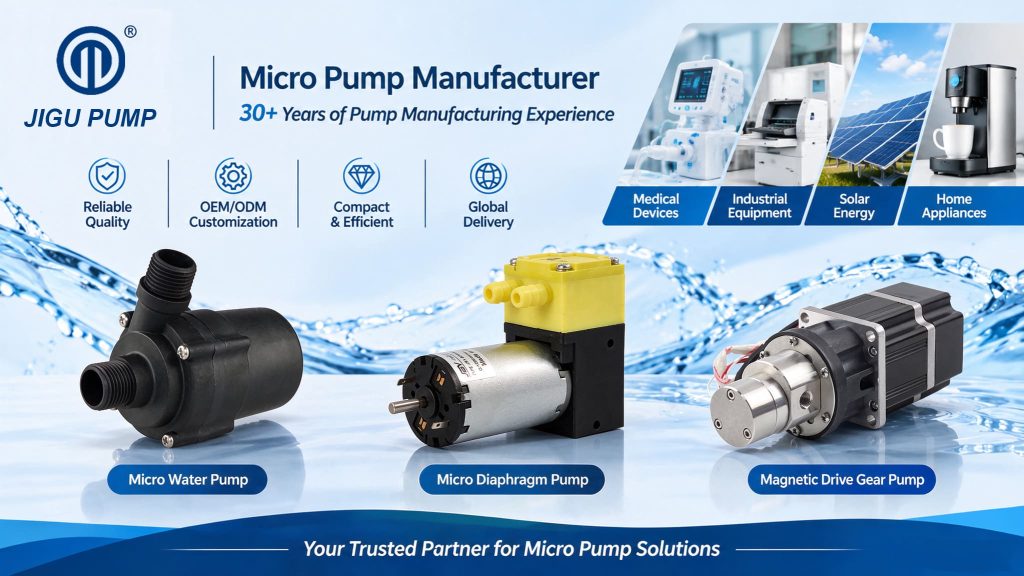
JIGU is a micro pump manufacturer based in Ningbo, China, with manufacturing experience dating back to 1990.
The company offers three main micro pump categories:
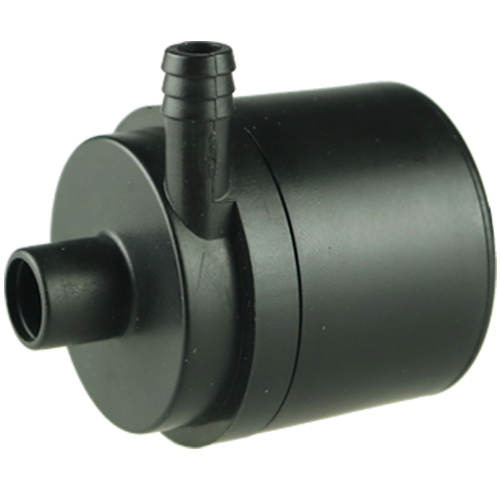
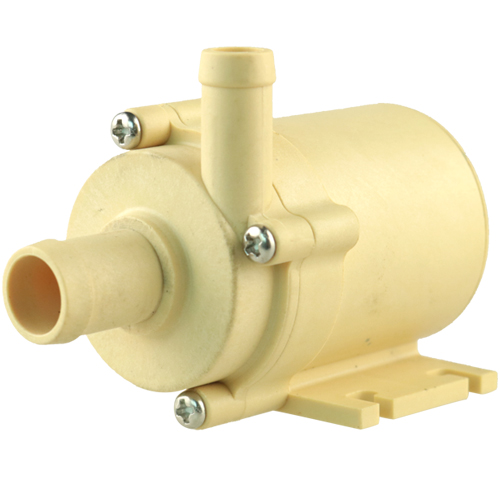
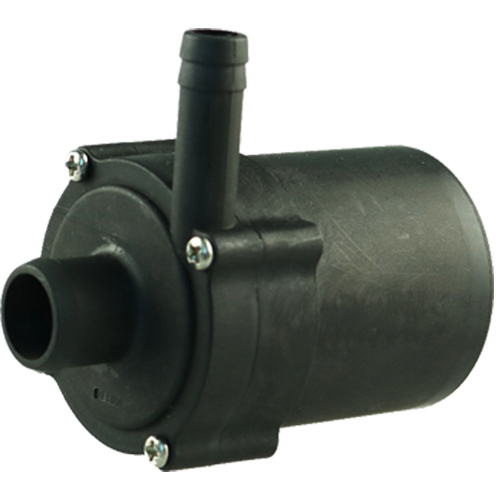
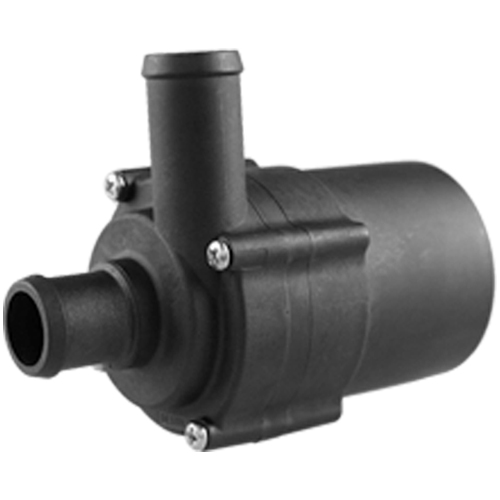
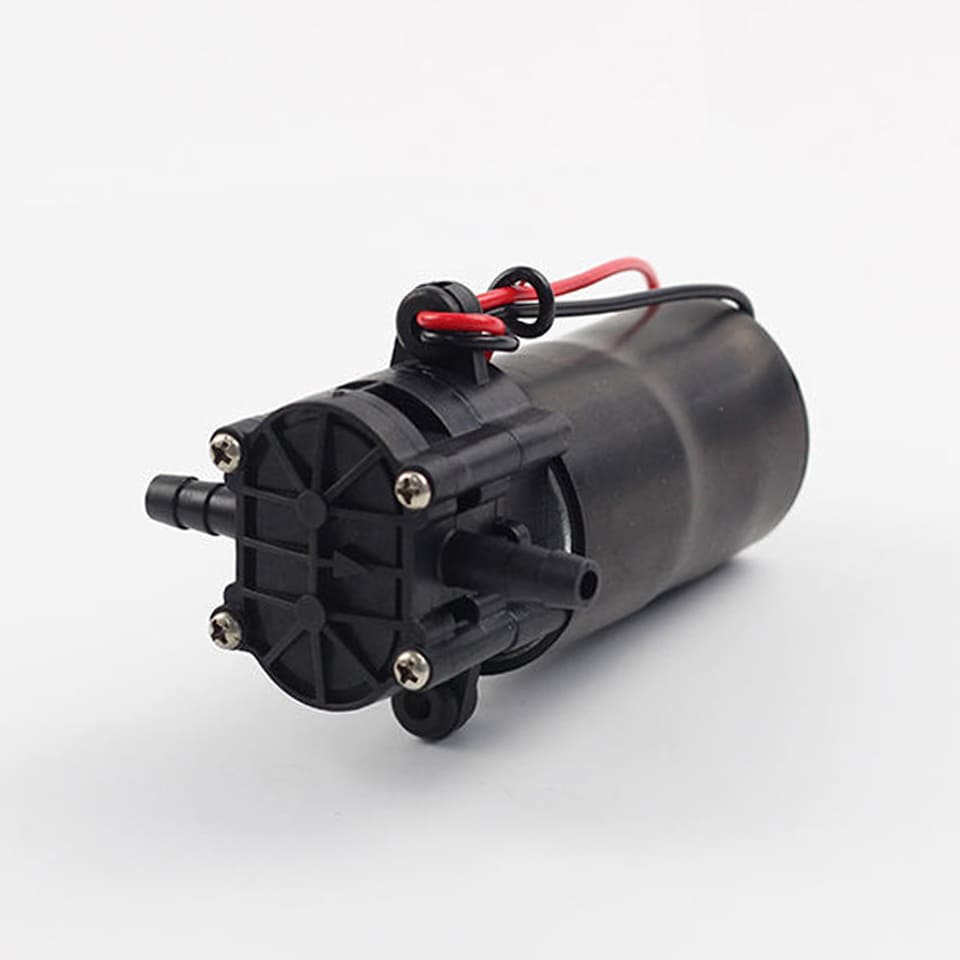
Micro centrifugal water pumps
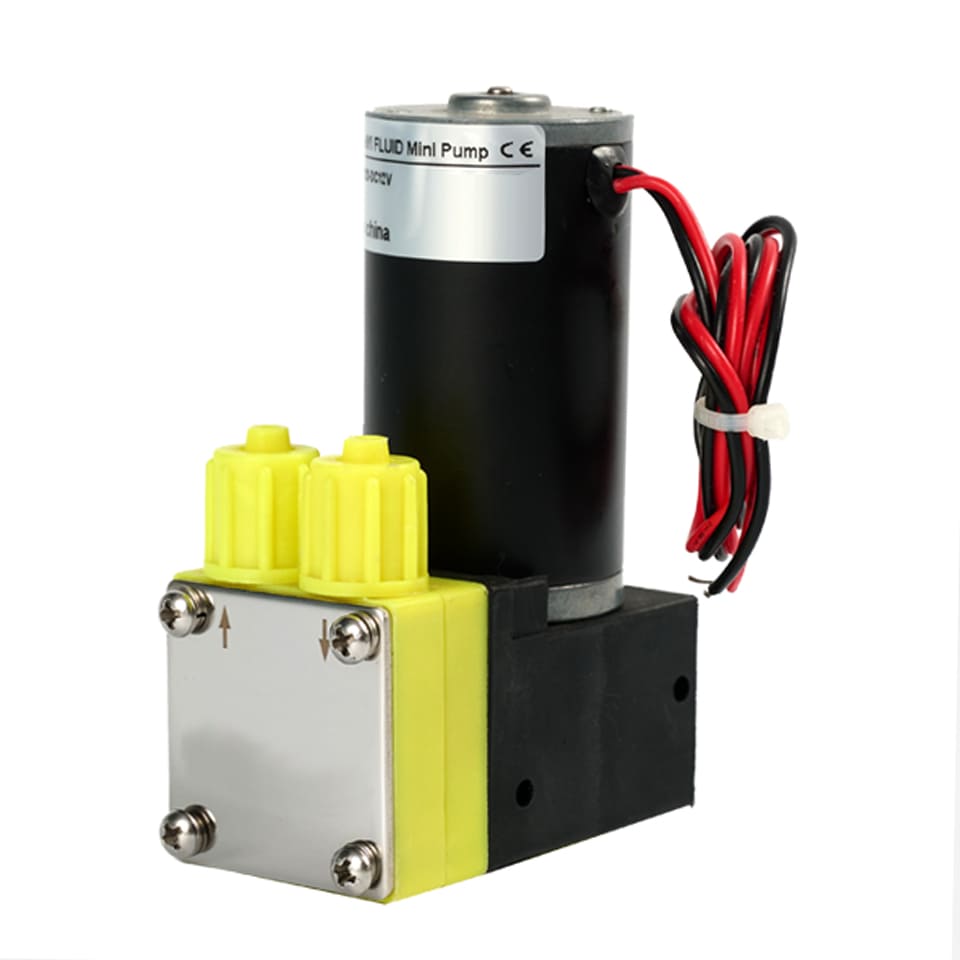
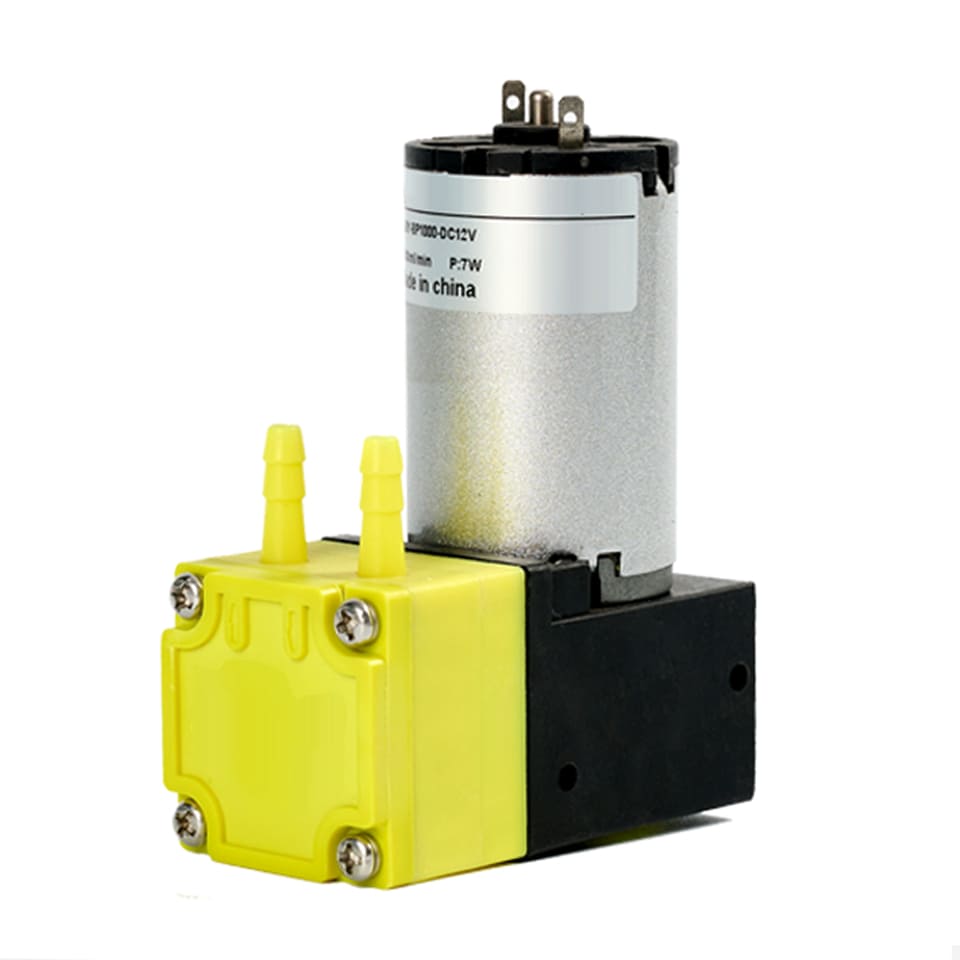
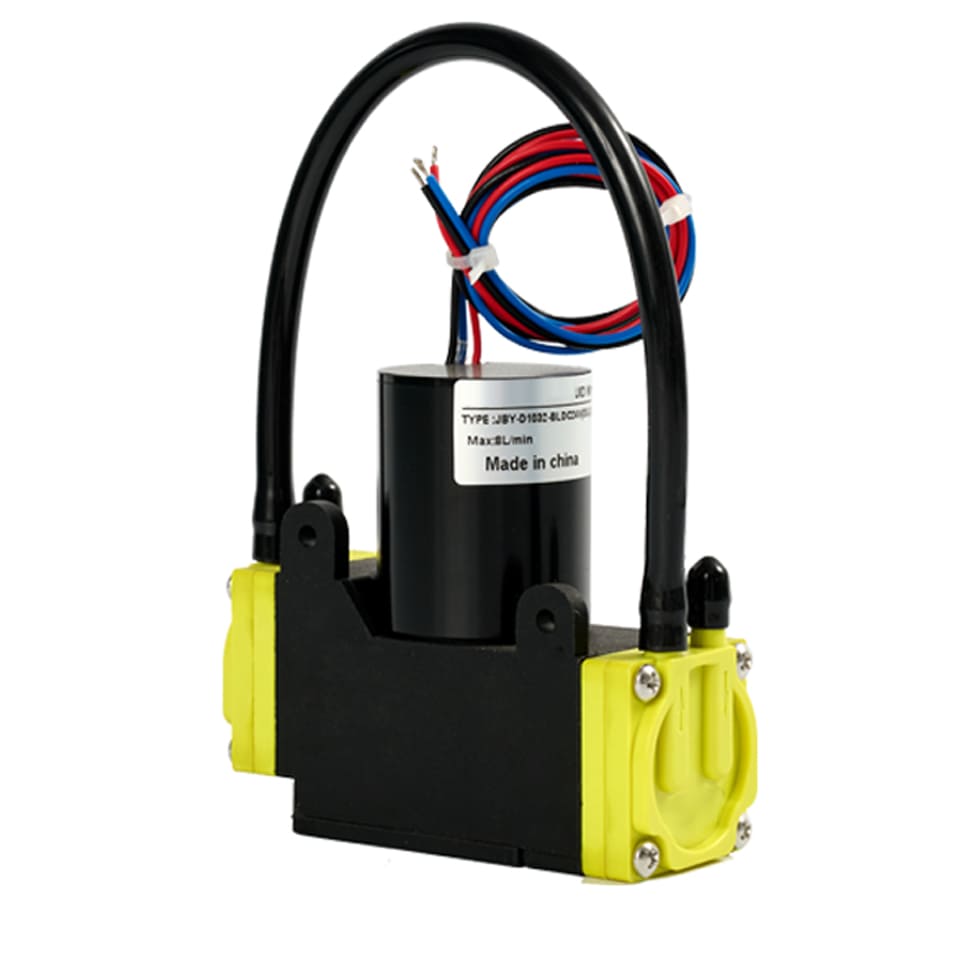
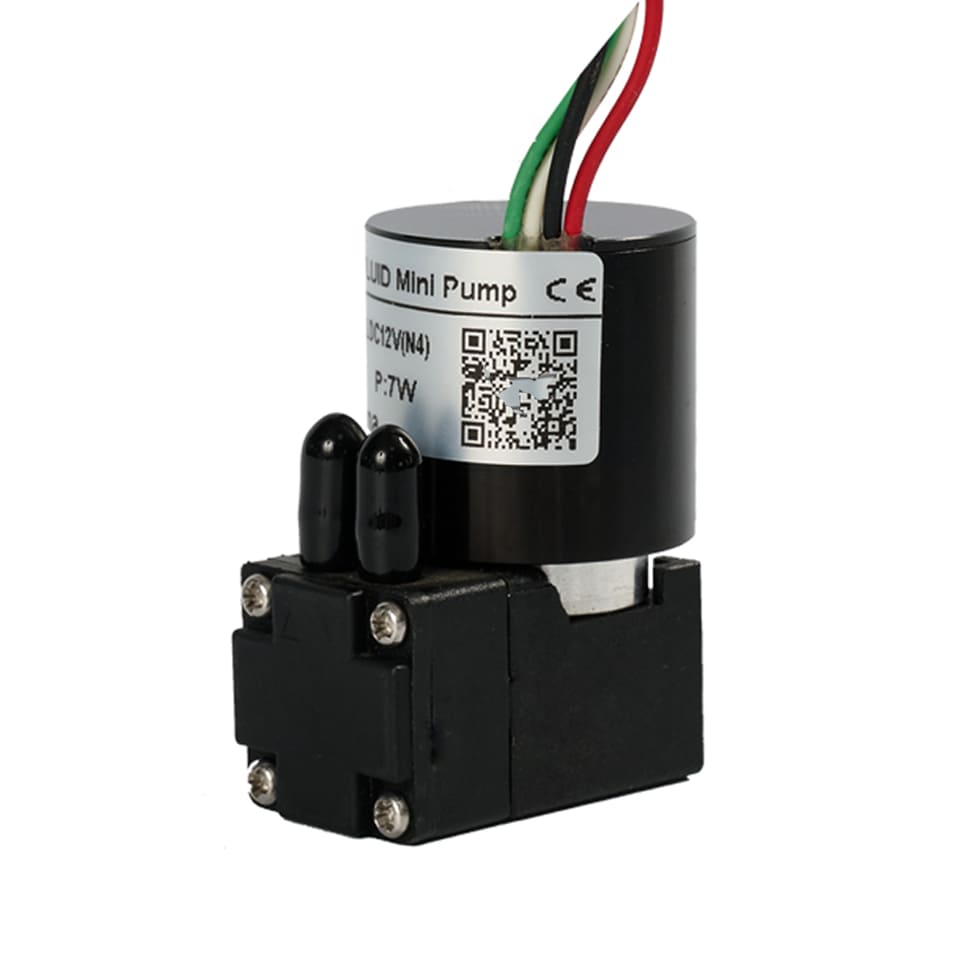
Micro diaphragm pumps
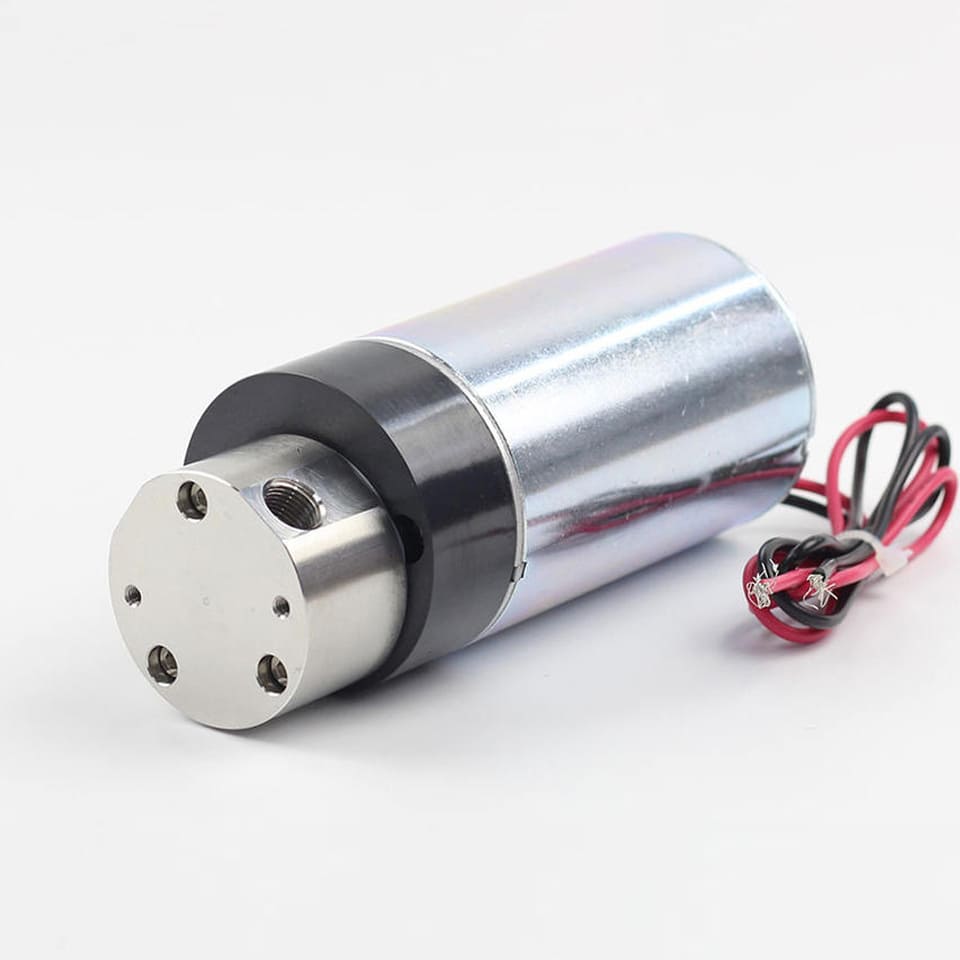
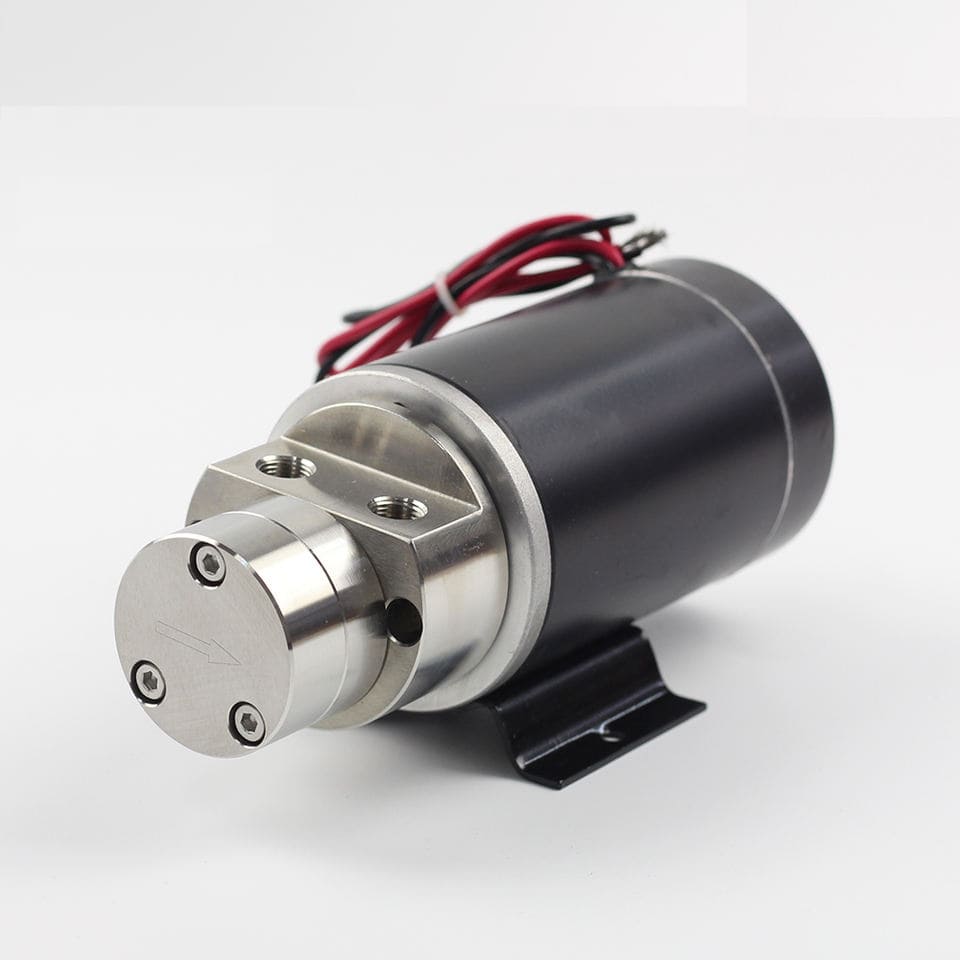
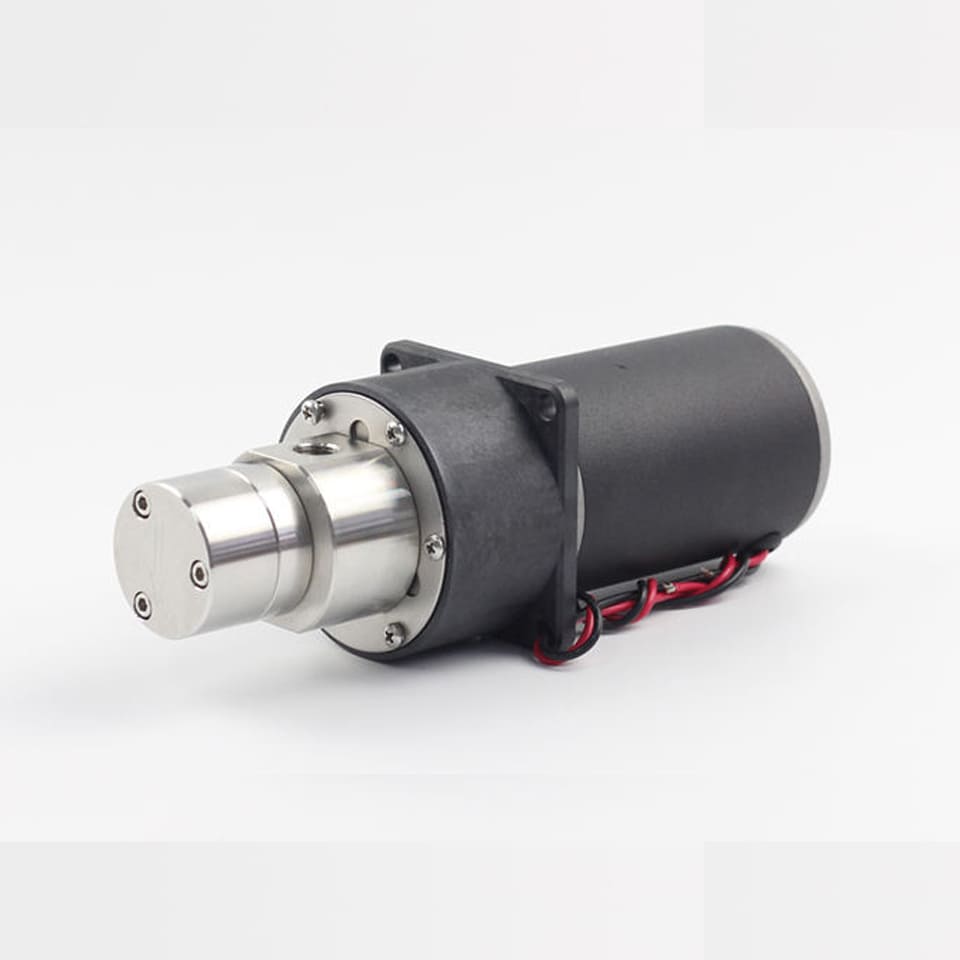
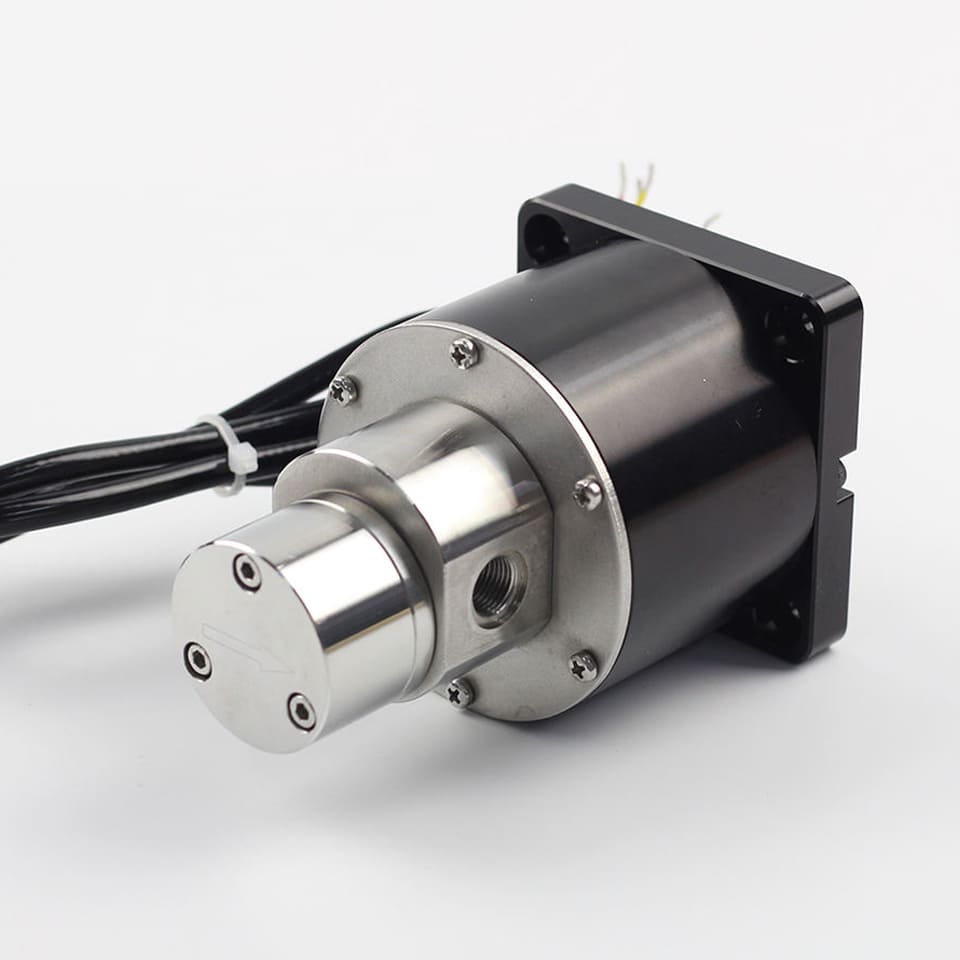
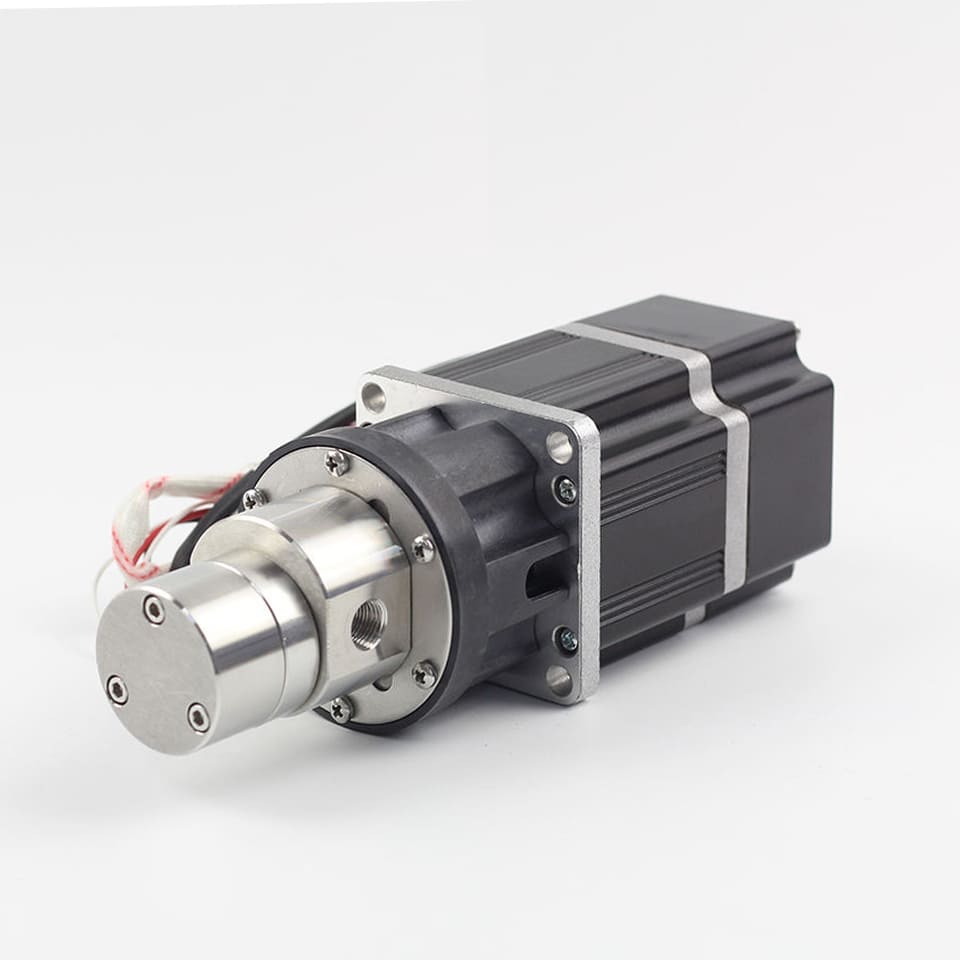
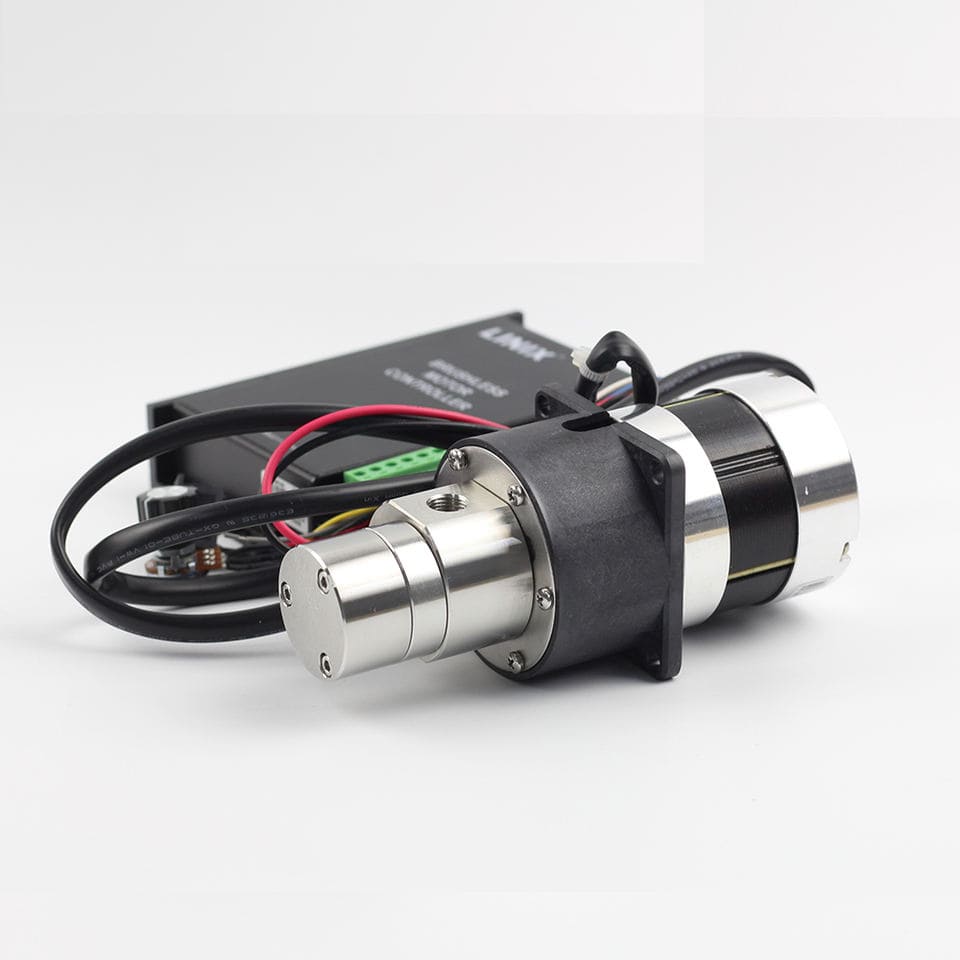
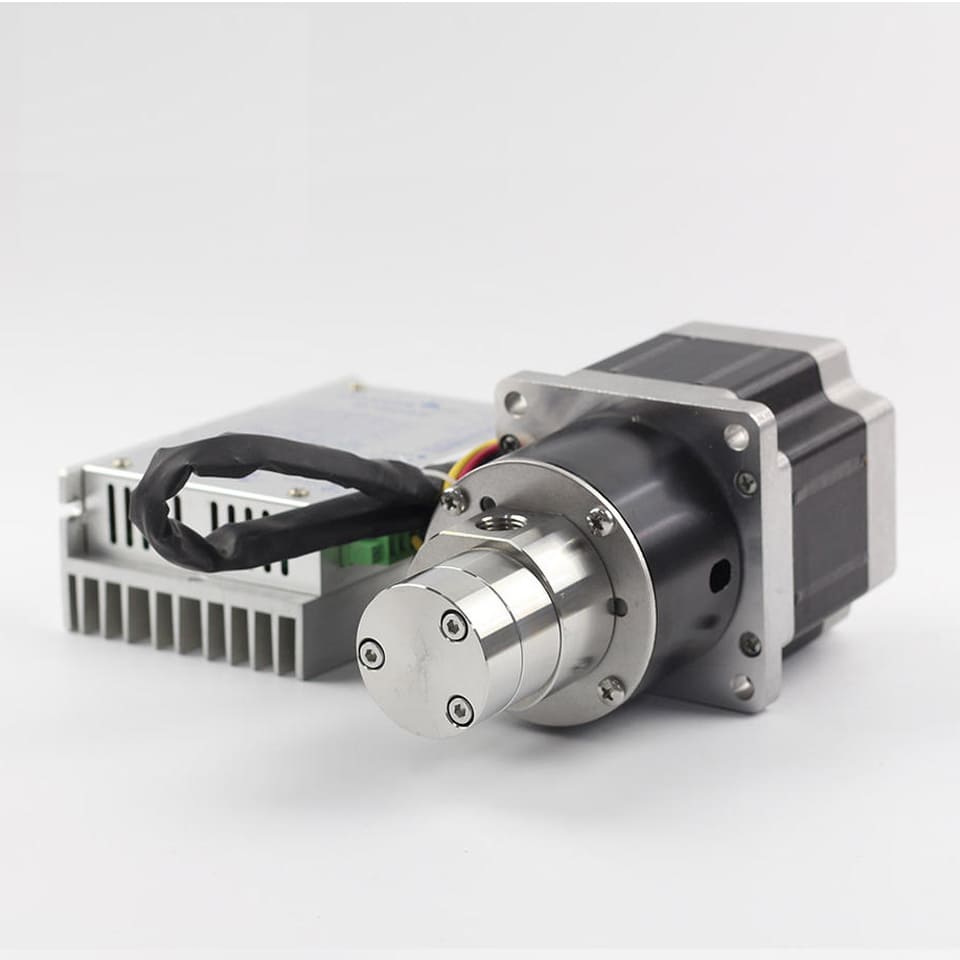
Magnetic drive gear pumps
These products serve different fluid handling requirements and can be evaluated for OEM equipment projects based on the application, performance requirements and operating conditions.
JIGU’s main OEM product discussions can cover pump selection, motor configuration, wetted materials, connections, installation dimensions and other project requirements, subject to model availability and engineering evaluation.
For equipment manufacturers comparing potential suppliers, the most useful starting point is a clear technical discussion. Sharing the application, target performance, liquid properties, installation space and estimated order quantity can help establish whether a standard model or a customized solution is more appropriate.
You can explore the product categories here:
Micro Centrifugal Water Pumps
Micro Diaphragm Pumps
Magnetic Drive Gear Pumps
If you are comparing micro pump suppliers for an upcoming OEM project, contact JIGU with your requirements to discuss a suitable solution.

Frequently Asked Questions
How do I compare micro pump manufacturers?
Start by comparing equivalent product specifications, actual performance, material compatibility, quality control, sample testing, technical support and delivery conditions. Once the technical scope is clear, compare quotations and long-term purchasing value.
Why do micro pump prices vary between suppliers?
Prices may vary because of differences in motor configuration, wetted materials, pump structure, performance requirements, customization, testing requirements, order quantities and commercial terms. Always confirm that suppliers are quoting against the same specifications.
Should I always choose the lowest-priced micro pump supplier?
Not necessarily. A low unit price may not represent the best overall value if the product does not meet the required performance or creates additional quality, integration or delivery risks. However, a higher price does not automatically guarantee better quality either. Compare the complete technical and commercial offer.
How can I evaluate a pump supplier’s product quality?
Review product specifications, material information, inspection procedures and performance test methods. Request samples and establish clear acceptance criteria. For ongoing orders, also discuss production consistency and how quality issues are handled.
Is sample testing enough before mass production?
Sample testing is important, but it does not independently establish mass production consistency. Buyers should also confirm the approved product configuration, production inspection procedures and how changes or deviations are controlled.
What should I consider when choosing a long-term OEM pump supplier?
Consider technical suitability, product consistency, engineering support, customization feasibility, production lead time, communication and commercial conditions. The supplier should be able to support both the initial development stage and future repeat orders.
Comparing micro pump suppliers for your next OEM project?
Send JIGU your application details, required performance and purchasing expectations. Our team can help evaluate suitable standard pump models and discuss possible OEM configurations.
Related Products
Reach Out Today
Looking for a micro pump manufacturer for your project? Contact JIGU Pump to discuss your application requirements and get a suitable pump recommendation and quotation.

Share Your Requirements
Share your application requirements, technical specifications, drawings, or reference images with our team.

Receive a Solution & Quotation
Our team will review your requirements and provide a suitable pump recommendation and quotation.

Confirm & Start Production
After sample approval and order confirmation, we proceed with production and arrange shipment according to the agreed schedule.