
How to Select a Micro Water Pump for OEM Equipment
How to Select a Micro Water Pump for OEM Equipment
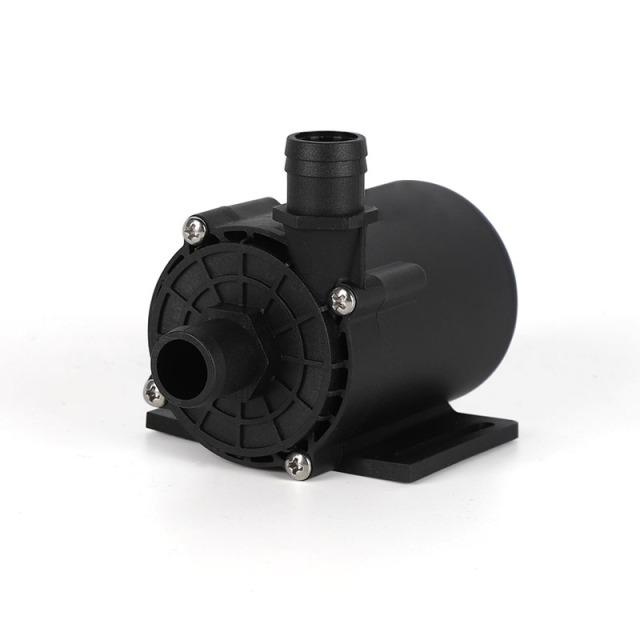
Choosing the right micro water pump is an important part of designing reliable OEM equipment. A pump that does not match the system requirements may result in insufficient flow, unstable circulation, excessive power consumption or difficulties during equipment integration.
For equipment manufacturers, micro water pump selection should consider more than the pump’s maximum flow rate or rated voltage. Actual operating conditions, required head, inlet conditions, liquid properties, motor configuration and installation space all affect pump performance.
This guide explains the key factors to consider when selecting a micro centrifugal water pump for OEM equipment, helping engineers and purchasing teams identify suitable pump specifications before requesting samples or quotations.
1. Define the Application and Operating Requirements
The first step in micro water pump selection is to understand how the pump will work inside the equipment.
Different applications may have different requirements, even when they use similar pump types. For example, a pump used in a beverage machine may operate differently from one used in an electronic cooling system.
Before selecting a pump, clarify the following information:
Application: What type of equipment will the pump be installed in?
Liquid: What medium will the pump transfer? Is it clean water, coolant or another liquid?
Operating mode: Will the pump run continuously, intermittently or according to a control signal?
Required flow rate: How much liquid needs to circulate or transfer within a given time?
Required pressure or head: What resistance must the pump overcome?
Operating environment: What are the expected temperature, humidity and surrounding conditions?
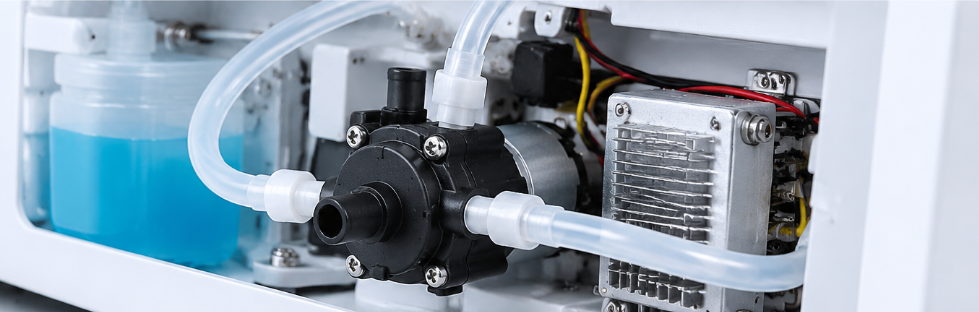
It is also important to understand the complete fluid circuit, including the reservoir, tubing, valves, filters, heat exchangers and other components.
A clear application description helps the pump manufacturer evaluate the requirements and recommend a suitable model.
2. Determine the Required Flow Rate and Head
Flow rate and head are two of the most important parameters when selecting a centrifugal water pump.
However, they should not be considered independently.
Required Flow Rate
Flow rate describes the volume of liquid the pump delivers over a specific period.
Common units include:
L/min (liters per minute)
L/h (liters per hour)
mL/min (milliliters per minute)
For example, a compact cooling system may require a certain circulation rate to transfer heat effectively. A beverage machine may need a different flow rate depending on its water delivery and dispensing design.
When defining the required flow rate, consider the actual operating demand rather than simply choosing a pump with the highest available flow.
Required Head and System Resistance
Head describes the energy per unit weight that a pump adds to the liquid. In practical water pump selection, it is commonly expressed in meters of water.
The required head depends on the complete system, including:
Vertical height difference between the liquid source and destination
Friction losses in pipes and tubing
Resistance from bends, connectors and valves
Pressure drops across filters, heat exchangers and other equipment
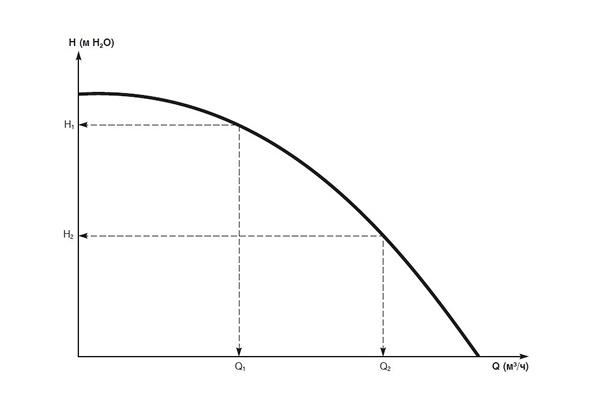
A pump’s flow rate generally decreases as the required head increases. Therefore, the maximum flow rate listed in a product specification may not be available under the actual operating conditions.
Check the Pump Performance Curve
A pump performance curve shows the relationship between flow rate and head under specified test conditions.
Before confirming a model, check whether the required operating point falls within the pump’s available performance range.
The actual operating point depends on the interaction between the pump performance curve and the system resistance. This is why selecting a pump based only on its maximum flow rate can lead to an unsuitable result.
For more information about pump and system curves, refer to ASHRAE’s technical guidance on centrifugal pumps.
3. Check the Water Inlet Conditions
The inlet conditions are important for stable centrifugal pump operation.
Even when a pump has sufficient rated flow and head, poor inlet conditions can reduce its actual performance.
Consider the following factors:
Inlet Pressure and Liquid Supply
Determine whether the pump receives liquid from a reservoir, a pressurized supply or another part of the equipment’s circulation system.
Check whether the liquid can reach the pump inlet without excessive restriction.
Some compact equipment designs place the pump above or away from the liquid reservoir. In these cases, the installation height and inlet arrangement should be evaluated carefully.
Inlet Tubing and Restrictions
The inlet pipe or tube should be designed to avoid unnecessary resistance.
Pay attention to:
Inlet tubing diameter
Tubing length
Sharp bends and narrow passages
Filters and inlet screens
Connectors and fittings
An undersized or restricted inlet can affect the liquid supply and may contribute to cavitation under unsuitable operating conditions.
Air in the Fluid Circuit
Air trapped in the system can interrupt liquid circulation or cause unstable pump operation.
The equipment design should consider how air is removed during initial filling and normal operation.
If the application involves frequent starting and stopping, the ability of the complete system to maintain a stable liquid supply should also be evaluated.
4. Consider Liquid Properties and Material Compatibility
Not every micro water pump is suitable for every liquid.
Although many micro centrifugal pumps are designed for water circulation, actual liquid properties may vary between applications.
Important factors include:
Liquid composition
Chemical properties
Viscosity
Operating temperature
Presence of particles or contaminants
Compatibility with wetted materials
For example, a cooling system may use water, a water-glycol mixture or a specially formulated coolant. These liquids may have different viscosity and material compatibility requirements.
If the application involves additives, cleaning agents or other chemicals, confirm that the pump’s wetted materials are compatible with the liquid.
Do not assume that a pump suitable for ordinary water will automatically be suitable for every coolant or chemical solution.
Providing the liquid name, concentration and operating temperature allows the manufacturer to evaluate material compatibility more accurately.
5. Select the Right Motor and Electrical Configuration
The motor configuration affects pump performance, power consumption, control options and service life.
For OEM equipment, electrical compatibility should be confirmed before finalizing the pump model.
Brushless DC Motor
Brushless DC motors are widely used in compact equipment where controlled operation and long-term reliability are important.
JIGU’s micro water pump range uses brushless DC motor configurations.
Depending on the pump model and project requirements, relevant electrical parameters may include:
Rated voltage
Operating voltage range
Current consumption
Motor speed
Starting characteristics
Control method
Voltage and Power Requirements
The pump should match the electrical system of the equipment.
Common DC voltage requirements may include 12V or 24V, but the actual available options depend on the specific model.
When evaluating a pump, do not check voltage alone. Also consider the current available from the power supply and the pump’s electrical requirements under the intended operating conditions.
Speed Control and Operating Conditions
Some OEM applications require adjustable flow or different operating modes.
If speed control is needed, confirm whether the selected motor and pump configuration support the required control method.
The relationship between motor speed, flow rate, head and power consumption should be evaluated using the manufacturer’s technical data or sample testing.
6. Check Installation Dimensions and Fluid Connections
A pump must fit the equipment’s mechanical design as well as its hydraulic requirements.
For compact OEM equipment, installation space can be a major selection constraint.
Before confirming a model, check:
Overall pump dimensions
Mounting holes and fixing positions
Inlet and outlet locations
Port dimensions and connection types
Tubing diameter
Cable length and connector type
Required installation orientation
Clearance for maintenance or replacement
If the equipment has limited internal space, provide the available installation area or a mechanical drawing to the pump manufacturer.
It is also useful to confirm whether the pump can be installed in the intended orientation and whether the surrounding components allow sufficient access for tubing connections.
7. Evaluate the Pump Under Actual Operating Conditions
Product specifications are important for preliminary selection, but testing is often necessary to confirm whether a pump is suitable for the final equipment design.
A pump’s actual performance can be affected by the complete fluid circuit and operating environment.
During evaluation, consider testing:
Flow rate at the required operating head
Current consumption under normal operation
Startup performance
Continuous operating stability
Liquid temperature
Noise and vibration
Leakage and connection reliability
If the equipment operates under different conditions, test the pump at representative operating points rather than relying on a single measurement.
For example, a cooling system may have different flow resistance depending on valve positions or operating modes. The pump should be evaluated across the conditions that matter to the equipment.
For OEM projects, sample testing before mass production helps identify potential integration issues and confirm the suitability of the selected configuration.
8. What Information Should You Provide When Requesting a Micro Water Pump?
You do not always need a complete technical specification before contacting a pump manufacturer.
However, providing more application information can make the selection process faster and more accurate.
The following information is useful:
| Information | Details to Provide |
| Application | Equipment type and pump function |
| Liquid | Water, coolant or other liquid |
| Flow rate | Required flow in L/min or L/h |
| Head or pressure | Required operating head or system pressure |
| Power supply | Voltage and available current |
| Operating mode | Continuous or intermittent |
| Installation | Available space, mounting and connections |
| Environment | Operating temperature and surrounding conditions |
| Quantity | Sample quantity and estimated annual demand |
If some parameters are not yet available, you can still start with the equipment application, a system diagram, photos or an existing pump sample.
The manufacturer can then help evaluate the requirements and identify possible pump options.
For more details, see our guide: What Information Is Needed for a Custom Micro Pump Quote?
9. Why Choose JIGU for OEM Micro Water Pump Solutions?
JIGU Pump is a micro pump manufacturer based in Ningbo, China, with more than 30 years of experience in micro pump development and manufacturing.
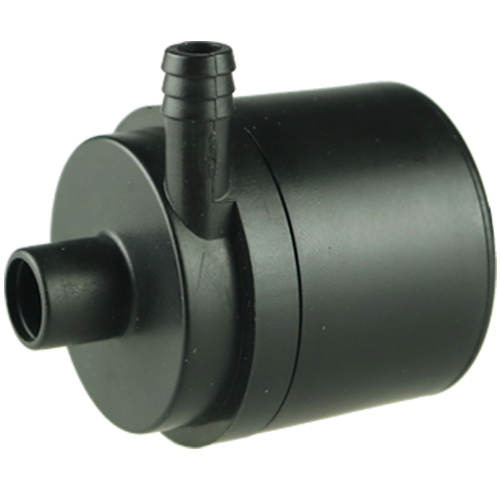
We provide micro centrifugal water pumps for equipment manufacturers and OEM applications, with brushless DC motor configurations.
Our product solutions can be evaluated for different equipment requirements, including:
Compact water circulation systems
Liquid cooling equipment
Beverage and water dispensing machines
Laboratory and analytical instruments
Other equipment requiring compact liquid transfer
Depending on the selected model and project requirements, customization may be evaluated for flow rate, motor configuration, voltage, materials, connections, wiring and installation dimensions.
Our team can work with customers to review application requirements, evaluate suitable pump models and support sample testing before mass production.
You can also explore our micro centrifugal water pump solutions for more product information.
Frequently Asked Questions
1. How do I choose the right micro water pump for my equipment?
Start by defining the required flow rate, head, liquid properties, power supply and installation dimensions. Then compare the actual operating requirements with the manufacturer’s pump performance data and confirm the selection through testing when necessary.
2. Is the maximum flow rate the actual working flow rate?
Not necessarily. The maximum flow rate is usually measured under specified test conditions. Actual flow depends on the required head and the resistance of the complete fluid circuit. Always evaluate the pump at the intended operating point.
3. Are brushless DC motors suitable for micro water pumps?
Yes. Brushless DC motors are commonly used in micro water pumps for compact OEM equipment. They can offer advantages in motor control and long-term operation. The appropriate motor configuration depends on the specific application and electrical requirements.
4. Can a micro centrifugal water pump handle coolant?
Some micro centrifugal water pumps may be suitable for coolant circulation. However, suitability depends on the liquid composition, viscosity, temperature and compatibility with the pump’s wetted materials. Confirm these details with the manufacturer before use.
5. Can JIGU customize micro water pumps for OEM equipment?
JIGU can evaluate customization requirements such as voltage, flow rate, materials, connections, wiring and installation dimensions, depending on the selected pump model and project conditions. Contact our team with your application details for a technical evaluation.
Contact JIGU for Micro Water Pump Selection
Looking for a suitable micro water pump for your equipment?
Share your application, required flow rate, operating head, liquid type and installation requirements with our team. If you do not have all the technical details, you can also send us equipment photos, drawings or an existing pump sample.
JIGU will help evaluate the requirements and discuss suitable micro water pump options for your OEM project.
Contact us to discuss your micro water pump requirements.
Related Products
Reach Out Today
Looking for a micro pump manufacturer for your project? Contact JIGU Pump to discuss your application requirements and get a suitable pump recommendation and quotation.

Share Your Requirements
Share your application requirements, technical specifications, drawings, or reference images with our team.

Receive a Solution & Quotation
Our team will review your requirements and provide a suitable pump recommendation and quotation.

Confirm & Start Production
After sample approval and order confirmation, we proceed with production and arrange shipment according to the agreed schedule.