
Micro Pumps for Medical Devices: Applications and OEM Selection
Micro Pumps for Medical Devices: Applications and OEM Selection
Micro Pumps for Medical Devices play an important role in selected medical, healthcare and diagnostic equipment. They can support liquid transfer, air supply, vacuum generation and fluid circulation within compact equipment.
For medical device manufacturers, choosing a suitable pump involves more than checking its size or maximum flow rate. Engineers also need to consider operating pressure, fluid compatibility, noise, vibration, reliability, electrical requirements and the equipment’s overall safety requirements.
This guide explores common applications of micro pumps in medical and healthcare equipment, compares different pump technologies and explains the key factors OEM manufacturers should evaluate when selecting a pump supplier.
Why Are Micro Pumps Used in Medical Equipment?
Medical and healthcare equipment often needs compact fluid-handling components that can operate within limited installation spaces.
A micro pump can help move liquids or gases through internal circuits, maintain pressure differences, support sample handling or circulate fluids. Its specific function depends on the equipment design and the pump technology selected.
Compared with larger industrial pumps, micro pumps can offer several integration advantages:
Compact installation: Suitable for equipment with limited internal space.
Flexible operating configurations: Different pump technologies can support different liquid and gas handling requirements.
DC motor options: Selected models can be configured for different voltage and control requirements.
OEM integration: Pump dimensions, connections, electrical interfaces and performance can be evaluated against equipment requirements.
Application-specific selection: Engineers can select a pump according to the actual fluid, pressure, flow and operating conditions.
However, a compact pump is not automatically suitable for every medical application. The complete pump assembly must be evaluated against the equipment’s intended use and applicable requirements.
Common Applications of Micro Pumps in Medical Devices
Micro pumps can be used in different types of medical and healthcare equipment. The following examples describe potential equipment applications where liquid or gas handling functions may be required. Actual suitability depends on the specific pump model and engineering validation.
1. Diagnostic and Analytical Equipment
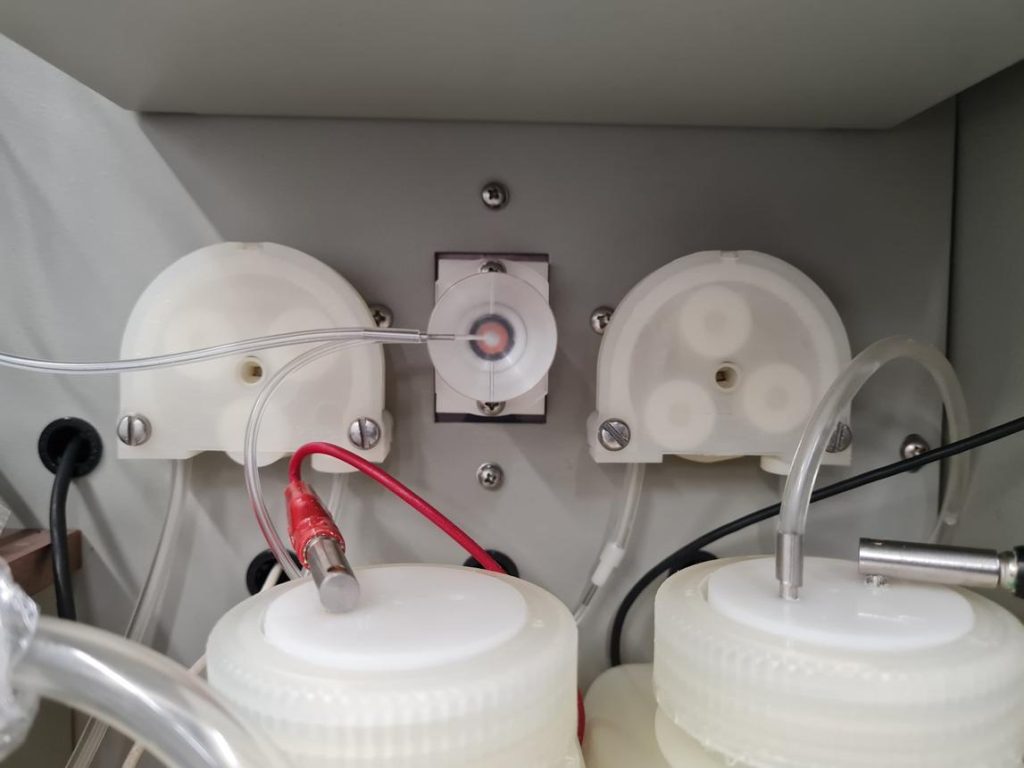
Diagnostic equipment may require controlled liquid transfer, reagent handling, sample movement or internal fluid circulation.
Depending on the instrument design, a micro pump may support:
Transferring compatible liquids between internal components
Moving reagents through fluid circuits
Supporting sample preparation processes
Circulating liquids within an instrument
Supplying or drawing gas in selected analytical systems
For these applications, engineers should pay attention to flow consistency, fluid compatibility, internal contamination risks and the repeatability of the operating process.
A suitable pump must be selected according to the instrument’s actual fluid path and operating conditions. Not every micro pump is appropriate for direct sample or reagent handling.
2. Blood Pressure Monitoring and Pneumatic Equipment
Some healthcare equipment uses pneumatic systems to generate or control air pressure.
In these systems, a compact air pump may be considered for supplying air to an internal circuit or pressure chamber. The pump’s operating pressure, airflow, response time, noise and vibration can all influence the final equipment design.
For example, pressure-related equipment may require:
A suitable air supply
Stable pressure generation
Controlled inflation and deflation
Compact mechanical installation
Acceptable operating noise
A micro diaphragm air pump may be a candidate for certain pneumatic functions. However, the required pressure range, airflow and control method must be verified against the equipment design.
Pneumatic Compression and Therapy Equipment
Some healthcare and rehabilitation equipment uses air pressure to perform compression or other pneumatic functions.
A micro air pump may be considered as part of the air supply system, depending on the required pressure, airflow, operating cycle and equipment configuration.
Important selection considerations include:
Required air pressure and flow rate
Inflation and deflation cycle
Operating frequency
Noise and vibration
Continuous or intermittent operation
Electrical control requirements
The pump should be tested under representative system conditions rather than selected only by its maximum rated performance.
Medical Suction and Vacuum Equipment
Certain medical and healthcare devices use vacuum or negative pressure for specific equipment functions.
A micro diaphragm vacuum pump may be considered where the required vacuum level, flow rate and operating conditions are within the pump’s capabilities.
Engineers should evaluate:
Required vacuum level
Evacuation time
Airflow under operating vacuum
Leakage within the complete system
Operating noise
Continuous or intermittent duty
It is important to distinguish between the pump’s maximum vacuum capability and its actual airflow at the required operating point. These values are not necessarily achieved simultaneously.
Any application involving patient-connected suction or other safety-critical functions requires additional system-level evaluation and validation.
5. Liquid Handling and Internal Circulation
Some medical and healthcare equipment uses internal liquid circuits for cooling, cleaning, fluid transfer or other auxiliary functions.
A micro liquid pump may be considered when the equipment requires compact liquid movement.
Depending on the liquid and operating conditions, possible pump technologies include centrifugal pumps, diaphragm pumps and magnetic drive gear pumps.
Before selecting a pump, engineers should confirm:
Liquid composition and chemical properties
Required flow rate and pressure
Operating temperature
Viscosity and potential particles
Wetted material compatibility
Required operating cycle
For liquid circuits that involve patient contact, sterile pathways or regulated fluid delivery, the complete fluid path and all relevant material and safety requirements must be evaluated separately.
Which Pump Technology Is Suitable for Medical Equipment?
Different pump technologies have different operating characteristics. The most suitable option depends on whether the equipment needs to move air, transfer liquid, generate vacuum or circulate fluid.
1. Micro Diaphragm Pumps
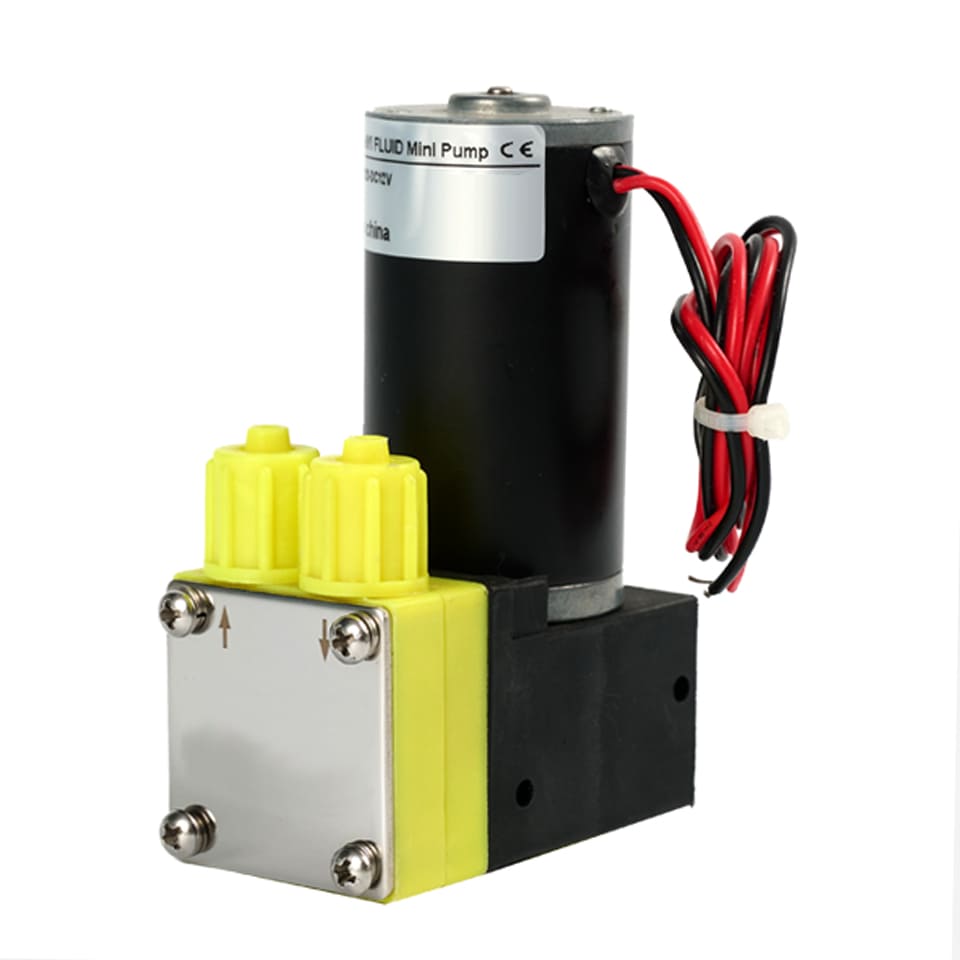
Micro diaphragm pumps can be designed for gas or liquid handling applications.
In gas applications, they may provide air supply or vacuum generation, depending on the pump configuration. Some models are designed for positive pressure, some for negative pressure, while certain configurations may support both.
Potential equipment functions include:
Air supply for pneumatic systems
Vacuum generation for selected equipment
Gas transfer in analytical instruments
Liquid transfer in compatible fluid systems
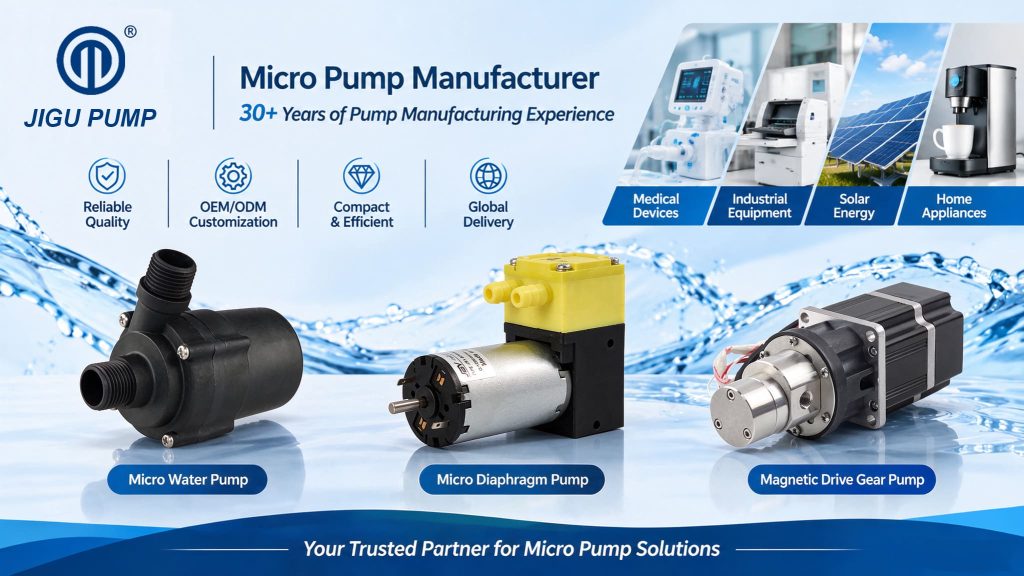
JIGU offers micro diaphragm pump configurations for both gas and liquid applications. Brushless DC motors are the main offering, while brushed motor options may also be available depending on the model.
When evaluating a diaphragm pump, engineers should check the pressure-flow relationship, operating cycle, diaphragm and valve materials, noise and expected service conditions.
Explore JIGU’s Micro Diaphragm Pump range for more information.
2. Micro Centrifugal Water Pumps
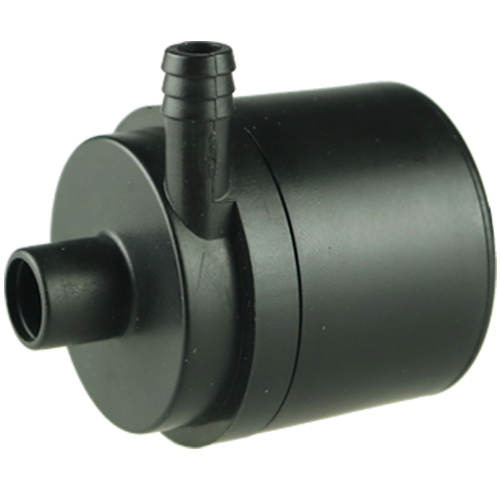
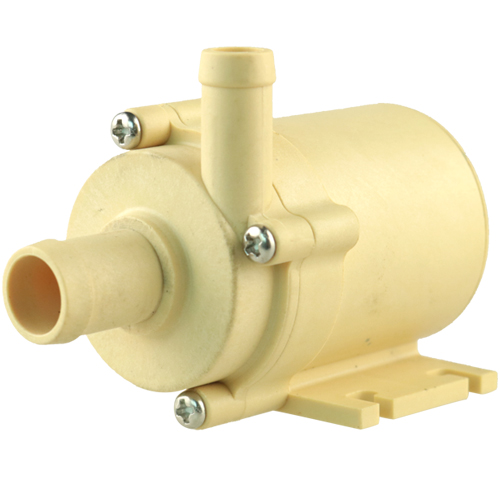
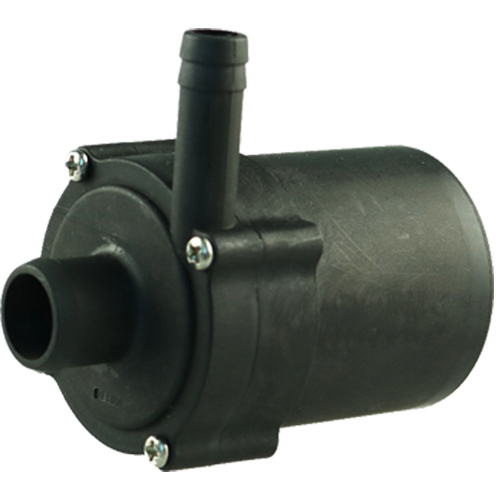
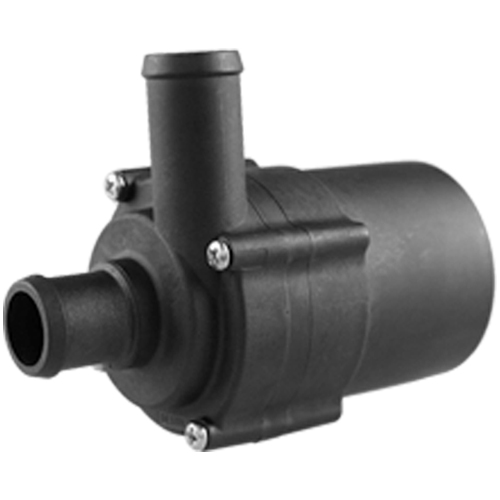
Micro centrifugal water pumps are commonly considered for liquid circulation and transfer applications.
They may be suitable for selected equipment that requires continuous liquid movement, cooling circulation or auxiliary fluid circulation.
Potential applications include:
Internal liquid circulation
Compact cooling systems
Liquid movement in selected healthcare equipment
Auxiliary water circulation
The actual operating point depends on the pump performance curve and the resistance of the complete fluid system.
JIGU’s micro centrifugal water pumps use brushless DC motors. Engineers should evaluate the required flow rate, head, inlet conditions, liquid temperature and wetted materials before selecting a model.
See JIGU’s Micro Centrifugal Water Pump page for product information.
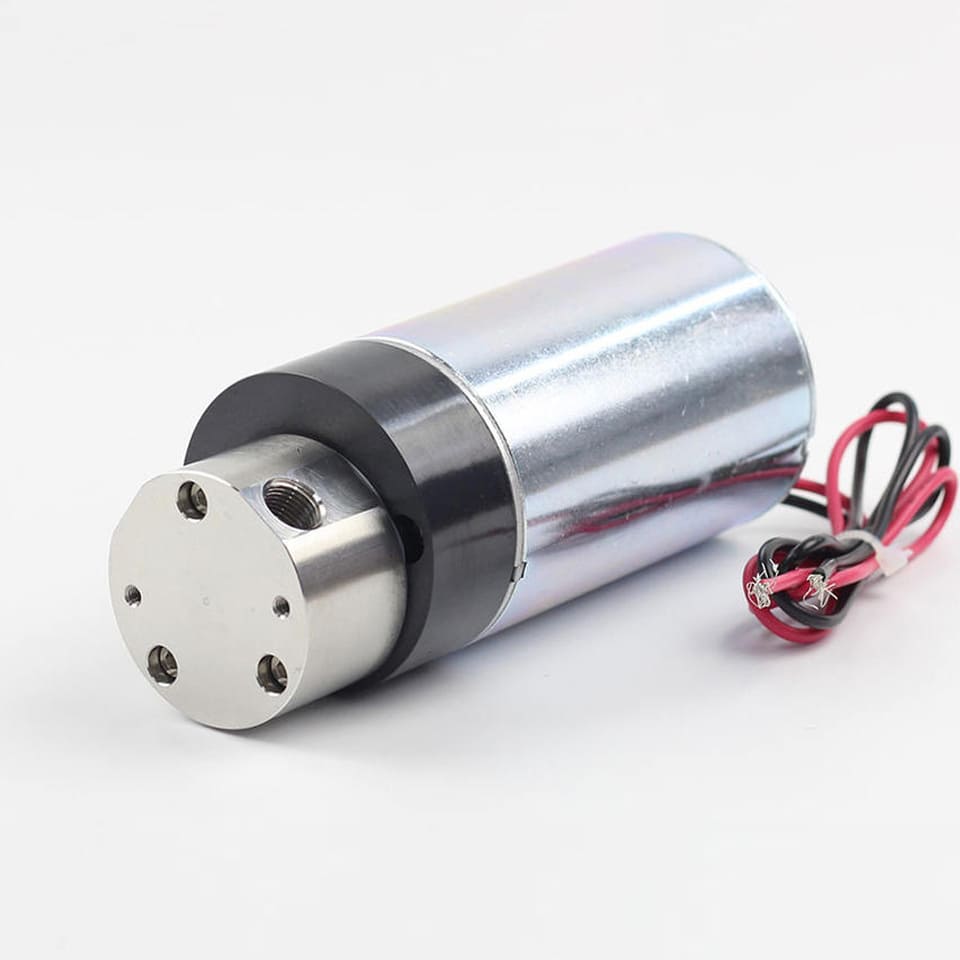
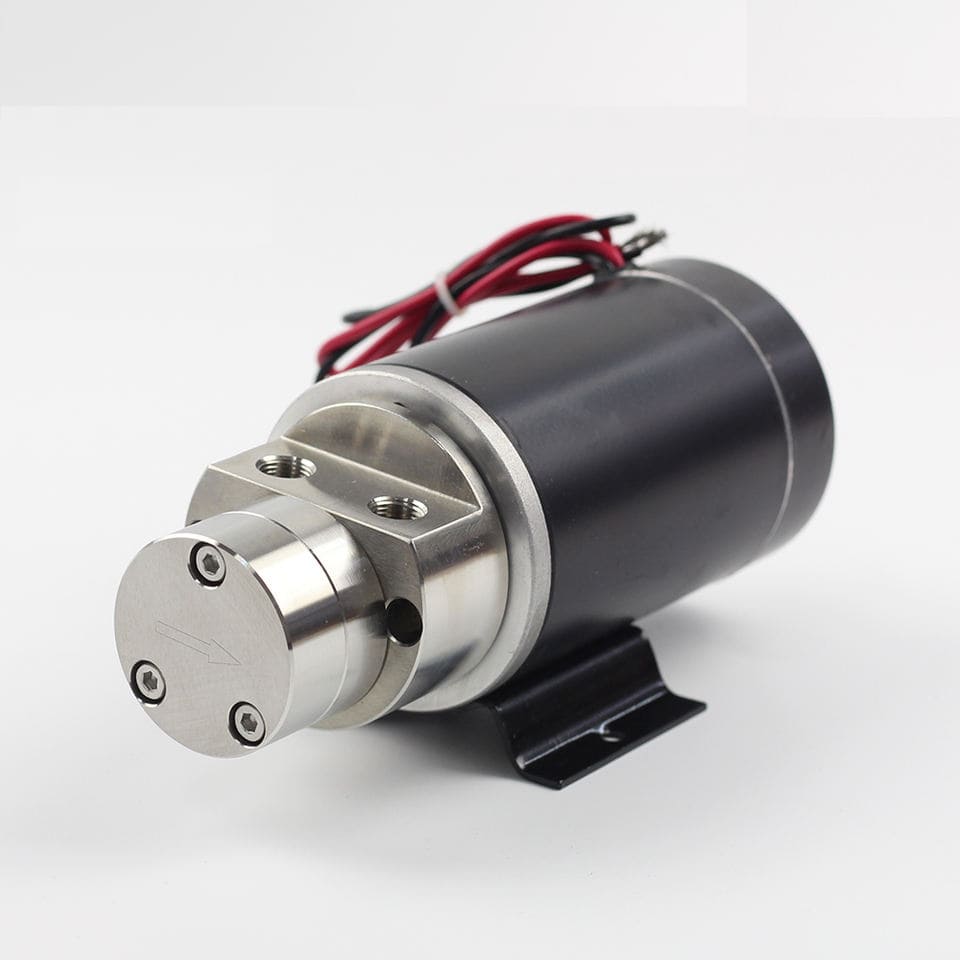
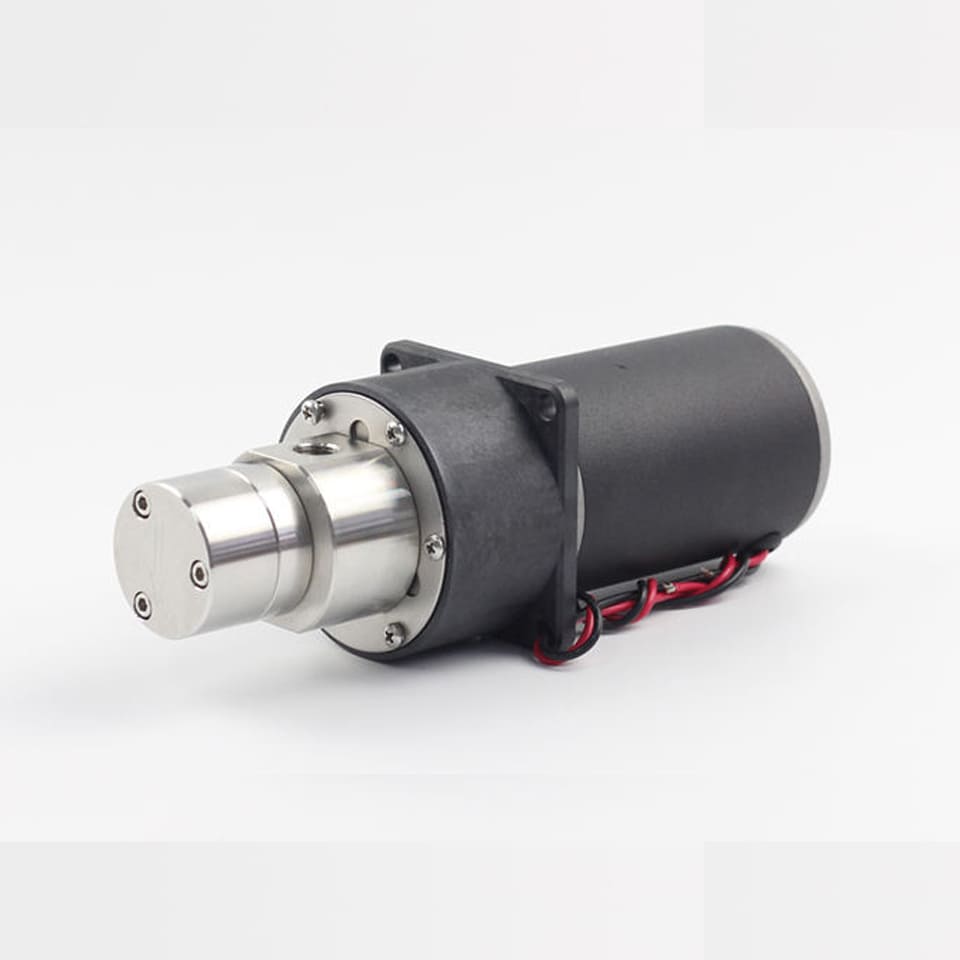
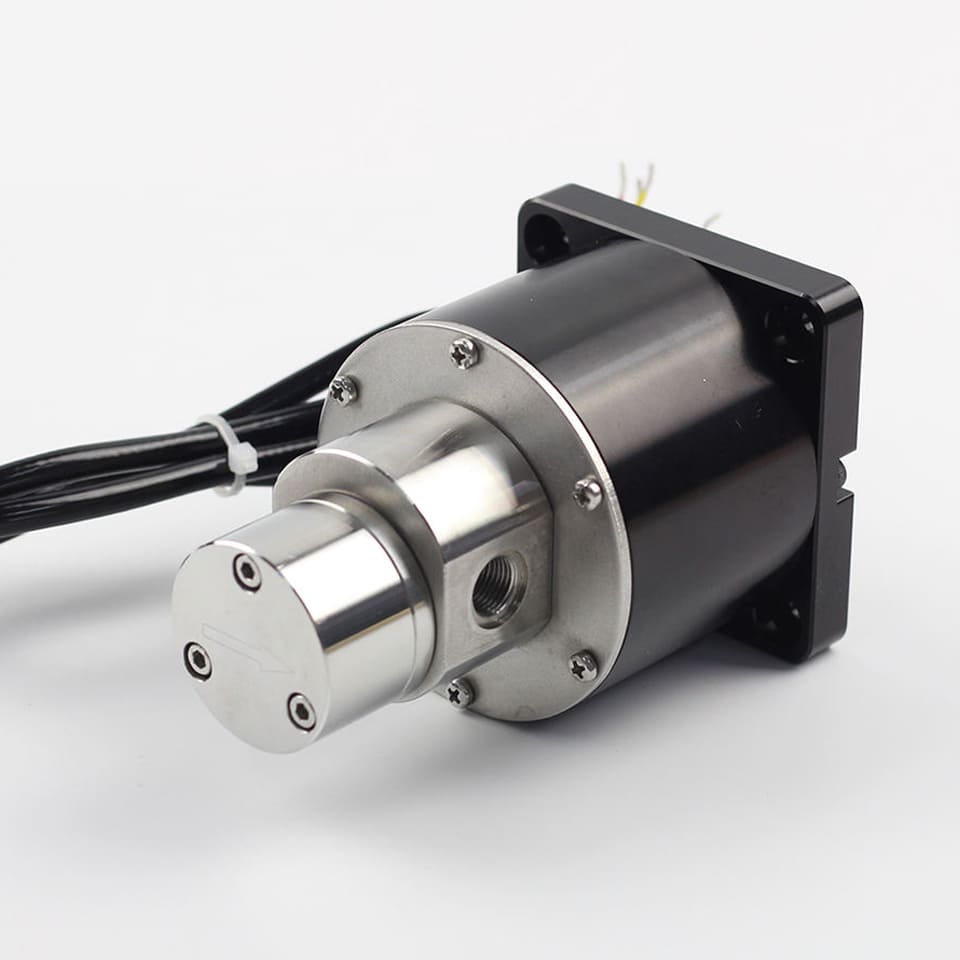
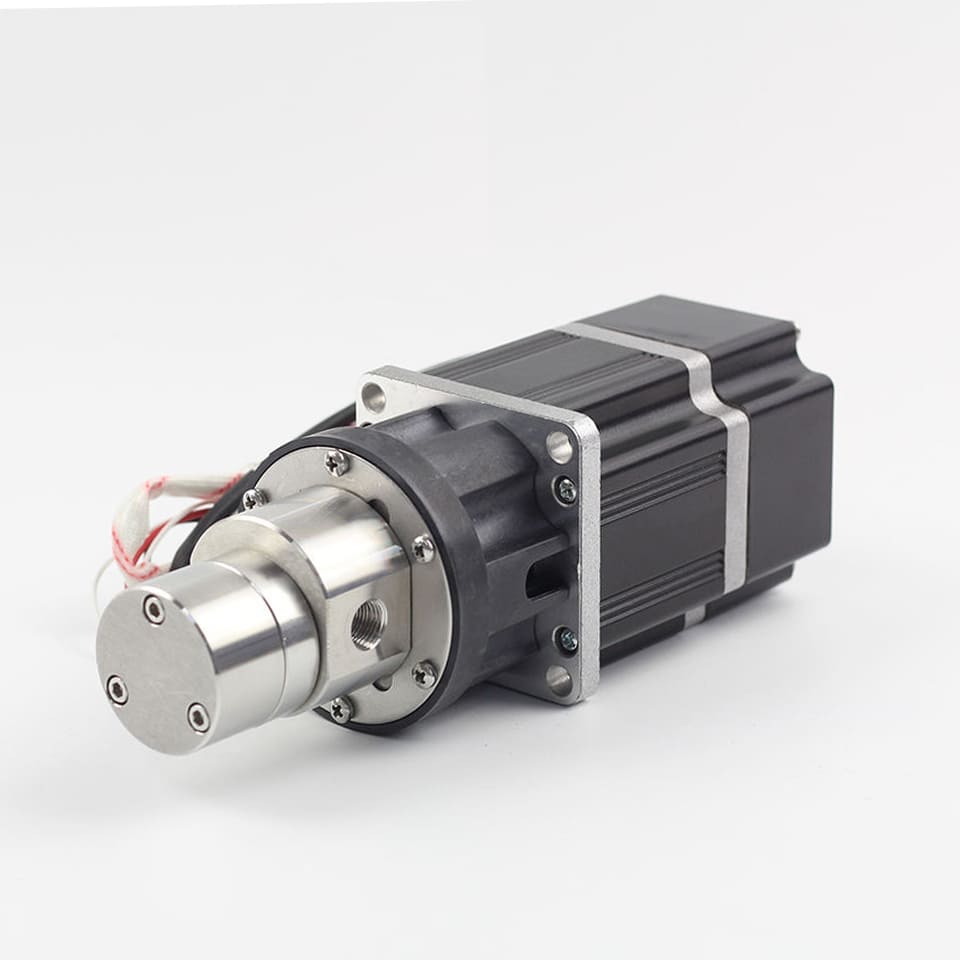
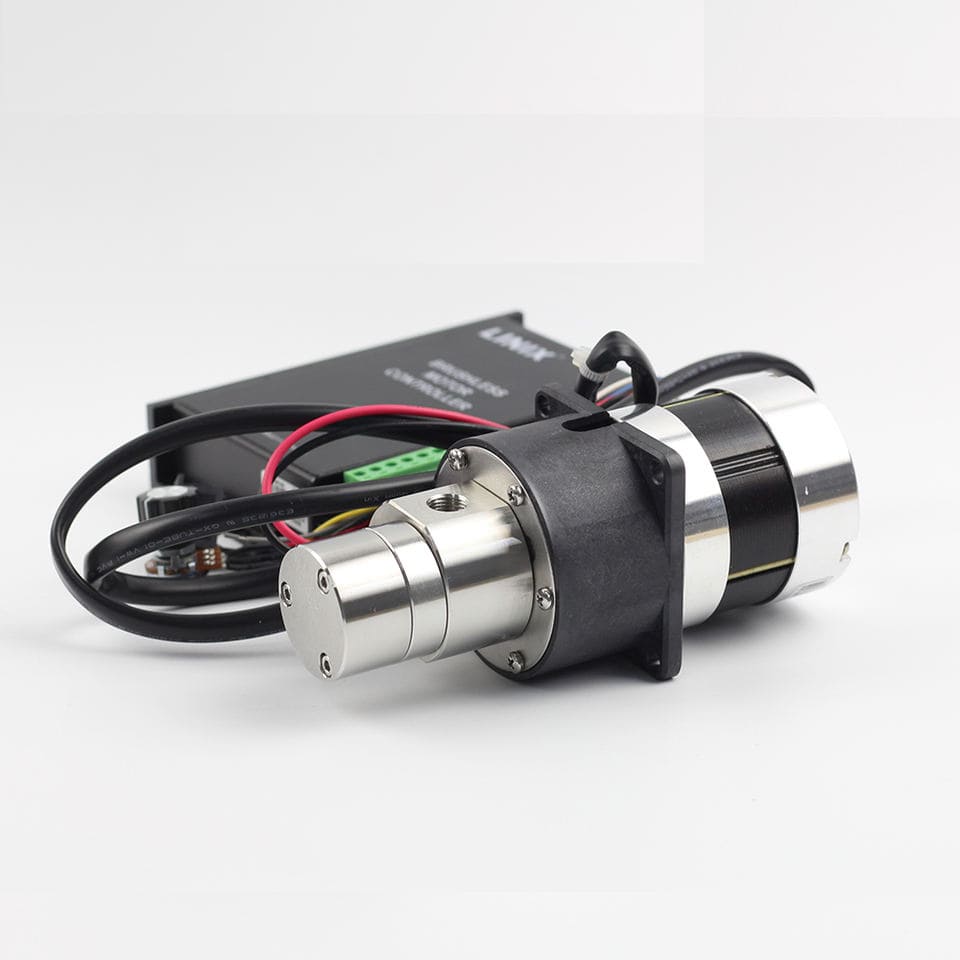
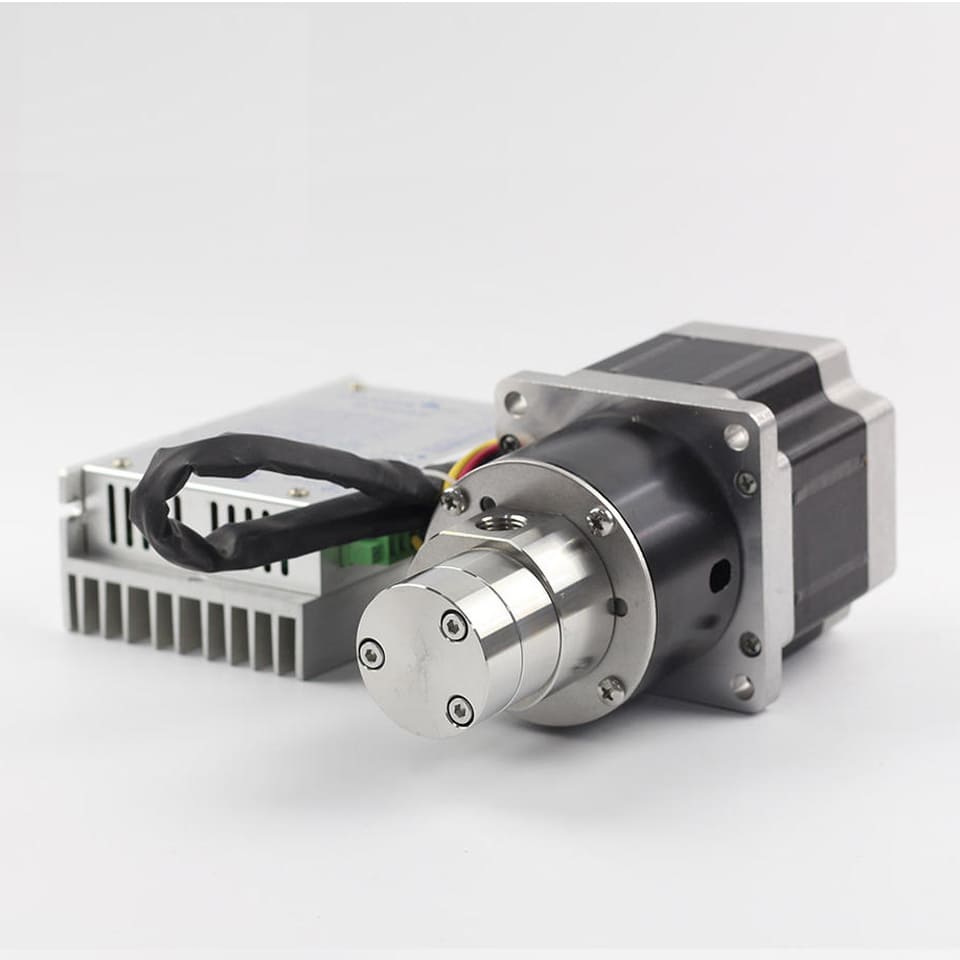
Magnetic Drive Gear Pumps
Magnetic drive gear pumps can be considered for selected liquid transfer applications where their flow and pressure characteristics match the equipment requirements.
The magnetic coupling eliminates the need for a conventional dynamic shaft seal between the motor and pump chamber, helping reduce potential leakage paths. However, static seals, connections and other system components still need to be evaluated.
Potential applications may include:
Controlled liquid transfer
Auxiliary fluid circulation
Compatible liquid handling in compact equipment
Selected dosing or fluid supply systems
Fluid compatibility is particularly important. Engineers should verify the pump’s wetted materials against the liquid composition, concentration, temperature and viscosity.
JIGU offers magnetic drive gear pumps with brushless DC motors as the main configuration, with brushed options available depending on the model.
Learn more about JIGU’s Magnetic Drive Gear Pump range.
Key Factors When Selecting a Micro Pump for Medical Equipment
Selecting a pump for medical or healthcare equipment requires a systematic evaluation of both pump performance and equipment integration.
1. Flow Rate, Pressure and Vacuum
The first step is to define the required operating point.
Maximum flow rate, maximum pressure and maximum vacuum are useful reference values, but they should not be treated as interchangeable operating conditions.
Engineers should identify:
Required flow rate under actual system resistance
Operating pressure or vacuum
Expected pressure variation
Required response time
Continuous or intermittent operation
For a more detailed explanation, see our guide to Micro Pump Flow Rate and Pressure.
2. Noise and Vibration
Noise can be an important consideration in medical and healthcare equipment, particularly in products designed for use in homes, clinics or quiet environments.
Pump noise may come from the motor, moving components, fluid pulsation, airflow, vibration or resonance in the equipment structure.
Engineers can evaluate noise and vibration through:
Pump mounting design
Isolation from sensitive equipment structures
Tubing and connection layout
Operating speed and duty cycle
Testing under representative conditions
A brushless motor eliminates mechanical brush wear as a noise source, but it does not make the complete pump silent. Pump structure, motor control and system integration still influence operating noise.
3. Fluid and Material Compatibility
Material compatibility is essential whenever a pump handles liquids or gases that may interact with its wetted components.
The evaluation should include:
Liquid or gas composition
Chemical concentration
Operating temperature
Viscosity
Wetted plastics and metals
Diaphragm, valve and seal materials
Material selection should be based on the actual fluid and operating conditions, not only the general name of the liquid.
For more information, read our article on Micro Pump Material Compatibility.
4. Reliability and Operating Life
A pump used in medical or healthcare equipment may need to operate repeatedly over an extended period.
Reliability depends on more than motor type. It can also be affected by:
Operating pressure and flow
Temperature
Start-stop frequency
Fluid properties
Diaphragm, valve or gear wear
Installation and system conditions
For example, diaphragm pumps may require attention to diaphragm and valve life, while gear pumps require evaluation of gear materials, lubrication conditions and fluid properties.
OEM manufacturers should define their expected operating cycles and verify pump performance through appropriate testing.
5. Electrical Requirements and Compact Integration
The pump must also match the electrical and mechanical design of the equipment.
Important details include:
Rated voltage
Current consumption
Starting current
Motor type
Control method
Connector and wire configuration
Mounting dimensions
Inlet and outlet connections
Brushless DC motors may be suitable for applications requiring specific operating characteristics, but external speed control depends on the selected motor, driver and electrical interface.
OEM Pump Development and Customization
Medical and healthcare equipment manufacturers often have specific requirements that cannot be determined by looking at a general product category alone.
A practical OEM pump selection process should begin with the equipment’s actual operating conditions.
Depending on the pump model and engineering assessment, possible customization areas may include:
Flow rate and pressure requirements
Motor configuration and rated voltage
Wetted materials
Inlet and outlet connections
Mounting dimensions
Wire length and connector type
Selected operating and control requirements
Not every parameter is available for every model. Customization feasibility should be confirmed through technical evaluation.
If your engineering team is still defining the pump specifications, you can start by sharing the equipment application, working principle, target flow and pressure, installation space or existing pump sample.
JIGU can evaluate the requirements and help identify a suitable standard model or a potential OEM solution.
For a more detailed overview, see Micro Pump Customization: OEM Options and Solutions.
Important Considerations for Medical Device Applications
A pump component used in medical equipment should not be evaluated in isolation from the final device.
The equipment manufacturer is responsible for determining the applicable regulatory requirements and validating the complete device for its intended use.
For example, the U.S. FDA classifies medical devices according to their intended use and the level of regulatory control required. The applicable requirements depend on the finished device, not simply on whether an individual component is described as a medical pump. You can refer to the FDA’s Classify Your Medical Device guidance.
Quality management requirements are also important for finished medical device manufacturers. The FDA’s Quality Management System Regulation (QMSR) became effective on February 2, 2026, incorporating ISO 13485:2016 by reference into its regulatory framework. See the FDA’s Quality Management System Regulation for details.
For pump suppliers and OEM customers, practical cooperation should include clear technical specifications, material information, sample evaluation and appropriate verification records.
A pump’s suitability for a particular medical device must be established through the customer’s application-specific assessment and validation. A general pump specification or component description does not by itself establish medical device compliance, biocompatibility, sterility or regulatory approval.
Why Work with an Experienced Micro Pump Manufacturer?
For OEM equipment manufacturers, choosing a pump supplier is not only about comparing product prices.
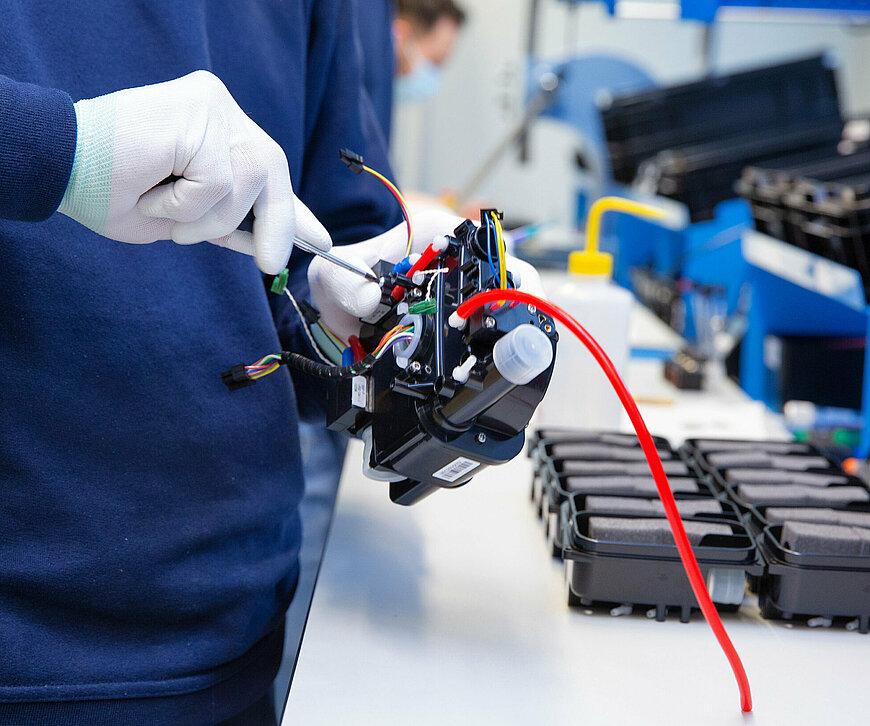
A suitable supplier should be able to understand the application, discuss technical requirements and support the evaluation of pump performance during equipment development.
Useful supplier capabilities include:
Experience with different micro pump technologies
Clear product specifications
Support for pump selection and application evaluation
Sample availability for engineering tests
Communication about material and electrical options
Consistent production and quality control processes
Long-term cooperation for OEM projects
JIGU has been developing and manufacturing micro pumps since 1990, with product categories including micro centrifugal water pumps, micro diaphragm pumps and magnetic drive gear pumps.
For medical and healthcare equipment projects, JIGU can evaluate pump requirements based on the intended function, operating conditions and integration details. The final suitability of a pump depends on model-specific technical assessment and customer validation.
If you are developing medical, healthcare or diagnostic equipment and need a compact pump component, you can contact JIGU to discuss your application.
Frequently Asked Questions
1. What types of micro pumps are used in medical devices?
Different applications may use diaphragm pumps, centrifugal pumps or gear pumps. The suitable technology depends on whether the equipment requires air supply, vacuum generation, liquid transfer or circulation.
2. Can a micro diaphragm pump be used in medical equipment?
A micro diaphragm pump may be considered for selected air, vacuum or liquid handling functions. Its suitability depends on the required flow, pressure, fluid compatibility, operating cycle and equipment validation requirements.
3. Are brushless DC micro pumps suitable for healthcare equipment?
Brushless DC micro pumps may be suitable for selected equipment designs. Engineers should evaluate voltage, control requirements, noise, operating conditions and the complete pump assembly rather than assuming that a brushless motor alone guarantees longer service life or regulatory compliance.
4. What information is needed to select a pump for medical equipment?
Useful information includes the equipment application, fluid or gas type, required flow rate, pressure or vacuum, operating temperature, duty cycle, voltage, installation dimensions and connection requirements.
5. Can JIGU provide customized micro pumps for medical equipment?
JIGU can evaluate OEM pump requirements and discuss available configurations or customization options according to the selected model. The feasibility of each requirement needs to be confirmed through technical assessment.
6. Does a micro pump automatically qualify as a medical-grade component?
No. The term micro pump describes a pump’s size or product category, not its regulatory status. The finished equipment manufacturer must determine the applicable requirements and validate the component within the intended device and application.
Looking for a micro pump for your medical or healthcare equipment project?
Share your application, required flow and pressure, fluid or gas type, voltage and installation requirements with JIGU. Our team can help evaluate suitable micro pump options for your OEM project.
Related Products
Reach Out Today
Looking for a micro pump manufacturer for your project? Contact JIGU Pump to discuss your application requirements and get a suitable pump recommendation and quotation.

Share Your Requirements
Share your application requirements, technical specifications, drawings, or reference images with our team.

Receive a Solution & Quotation
Our team will review your requirements and provide a suitable pump recommendation and quotation.

Confirm & Start Production
After sample approval and order confirmation, we proceed with production and arrange shipment according to the agreed schedule.