
Micro Pumps for Cooling Systems: Applications and OEM Selection
Micro Pumps for Cooling Systems: Applications and OEM Selection
Micro pumps for cooling systems help circulate liquids through compact equipment to support heat transfer and temperature management. They are commonly considered for electronic devices, laser systems, laboratory instruments, compact chillers and other equipment where installation space is limited.
For OEM equipment manufacturers, selecting a suitable cooling pump involves more than checking its maximum flow rate. The pump must work with the resistance of the complete circulation loop, the properties of the coolant, the required heat removal and the equipment’s operating conditions.
This guide explains common cooling applications, compares suitable micro pump technologies and outlines the key factors to consider when selecting a pump for OEM cooling systems.
Why Are Micro Pumps Used in Cooling Systems?
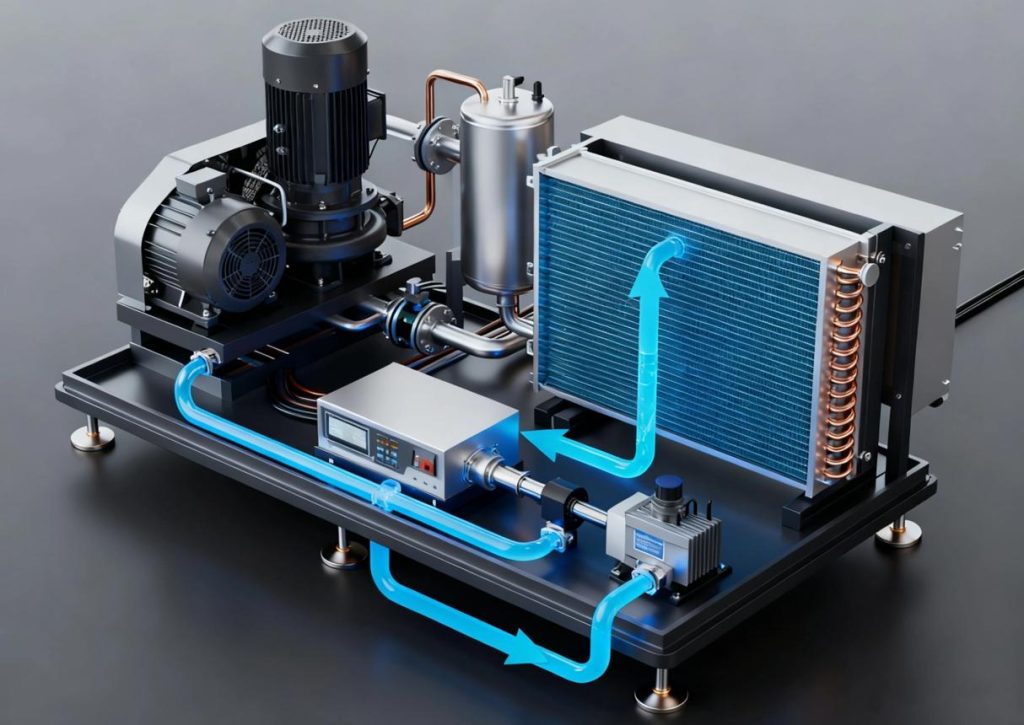
Many modern equipment designs require effective heat management within a relatively small space. A liquid cooling circuit can transfer heat away from components and carry it to a radiator, heat exchanger or another cooling element.
A micro pump provides the circulation force needed to move coolant through this circuit.
Compared with larger industrial pumps, micro pumps can be considered when equipment requires:
Compact dimensions: Limited installation space inside electronic devices, instruments and small cooling units.
Integrated DC power: Pump configurations that can be matched to the equipment’s electrical system.
Application-specific performance: Flow and pressure requirements suited to a particular cooling loop.
Flexible installation: Different inlet and outlet connections, mounting arrangements and tubing configurations, depending on the pump model.
OEM integration: A pump that can be incorporated into the equipment’s overall mechanical and electrical design.
However, a compact pump is not automatically suitable for every cooling application. The required circulation rate, system resistance, coolant properties and operating temperature must all be considered.
Common Applications of Micro Pumps in Cooling Systems
Micro pumps can support different types of liquid cooling circuits. The appropriate pump depends on the heat load, required circulation rate, coolant and design of the equipment.
1. Electronic Equipment Cooling
Electronic equipment may generate heat during continuous operation, particularly when components operate within a compact enclosure.
In selected designs, liquid cooling can transfer heat away from sensitive components and circulate it through a heat exchanger or radiator.
Potential applications include:
Power electronics and power conversion equipment
Electronic control systems
Compact industrial electronics
High-performance computing components
Specialized electronic instruments
For these applications, OEM designers should consider the required coolant flow, available installation space, operating temperature and electrical compatibility.
The pump must also be evaluated together with the cooling block, tubing, fittings and heat exchanger. A suitable pump alone cannot guarantee the required cooling performance.
2. Laser Cooling Systems
Laser equipment can generate concentrated heat during operation. Some laser systems use liquid circulation to maintain suitable operating temperatures and help protect temperature-sensitive components.
Micro water pumps may be considered for selected compact laser cooling systems, including:
Laser marking equipment
Laser cutting and processing equipment
Compact laser modules
Optical and photonic equipment
Important selection factors include the required circulation flow, pressure loss through the cooling channel, coolant temperature and compatibility with wetted materials.
The pump should be tested under representative operating conditions rather than selected only by its rated maximum flow.
3. Chillers and Compact Cooling Units
Small chillers and compact cooling units use circulation pumps to move coolant between the cooling source and the equipment being cooled.
These systems may be used in:
Small industrial cooling units
Laboratory chillers
Compact temperature-control equipment
Water circulation and heat exchange systems
The pump needs to overcome the resistance of the complete loop, including pipes, fittings, valves and heat exchangers.
In a closed circulation circuit, the actual pump operating point depends on the interaction between the pump performance curve and the system curve.
For a deeper explanation, the ASHRAE centrifugal pump guidance discusses pump selection in relation to system flow, pressure drop, electrical requirements and material considerations.
4. Laboratory and Analytical Equipment
Laboratory and analytical instruments may require internal liquid circulation for temperature control, sample preparation or other fluid-handling functions.
Depending on the equipment design, a compact pump may support:
Internal cooling circuits
Temperature-controlled liquid circulation
Cooling of selected analytical components
Fluid circulation in testing instruments
Low noise, stable operation and material compatibility may be important, particularly when the equipment is used in a controlled laboratory environment.
For applications involving reagents or process samples, the pump’s wetted materials must be checked against the actual liquid. Not every cooling pump is suitable for direct handling of laboratory samples or chemicals.
5. Battery and Energy Equipment Cooling
Some battery-related and energy equipment designs use liquid circulation to manage operating temperatures.
A compact pump may be considered in selected auxiliary cooling circuits where the required flow, pressure, coolant and installation conditions are compatible with the pump.
However, battery thermal management is a broad engineering field. Different systems may have very different safety, temperature-control and coolant requirements.
OEM manufacturers should evaluate the complete thermal management design before selecting a pump. A micro pump should not be assumed suitable for a particular battery cooling application without checking its specifications and testing the complete system.
Which Pump Type Is Suitable for Cooling Systems?
Different pump technologies have different operating characteristics. For many compact liquid cooling circuits, centrifugal pumps are a natural starting point. Other technologies may be considered when the fluid, operating conditions or system design require a different approach.
1. Micro Centrifugal Water Pumps
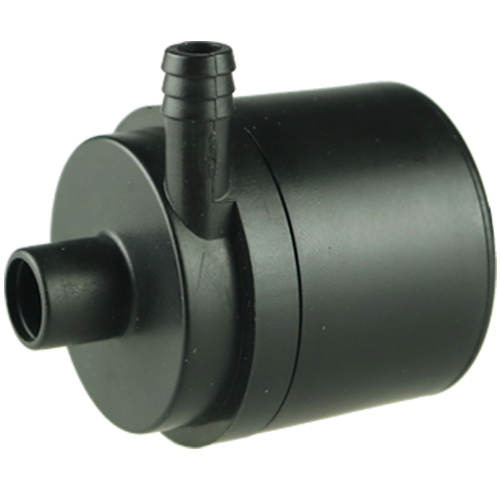
Micro centrifugal water pumps are commonly considered for liquid circulation applications.
An impeller rotates to transfer energy to the liquid, creating flow through the pump. The resulting flow and pressure depend on the pump design and the resistance of the connected system.
Potential applications include:
Compact liquid cooling loops
Electronic equipment cooling
Laser cooling systems
Small chillers and circulation units
Water-based cooling equipment
When selecting a centrifugal pump, OEM designers should evaluate:
Required flow rate at the actual operating pressure
Total resistance of the circulation loop
Inlet conditions and potential air entrapment
Coolant temperature and properties
Pump materials and connection design
Continuous or intermittent operating requirements
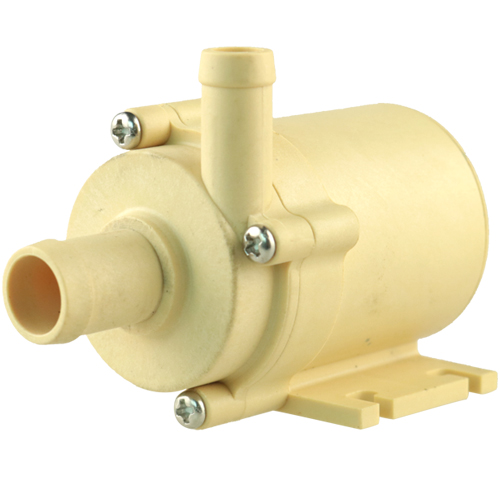
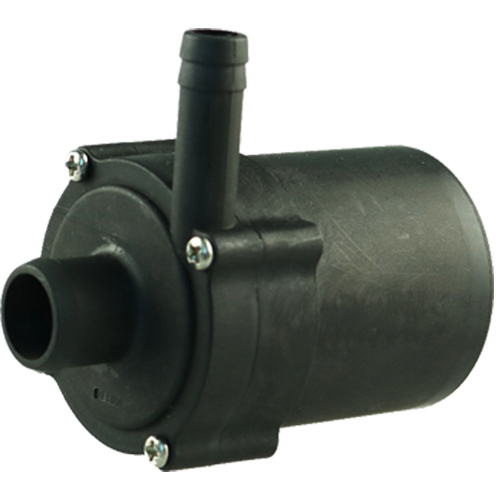
JIGU’s micro centrifugal water pumps use brushless DC motors. The specific flow, pressure, dimensions and liquid compatibility should be checked against the selected model.
Explore JIGU Micro Centrifugal Water Pumps for more information about the product category.
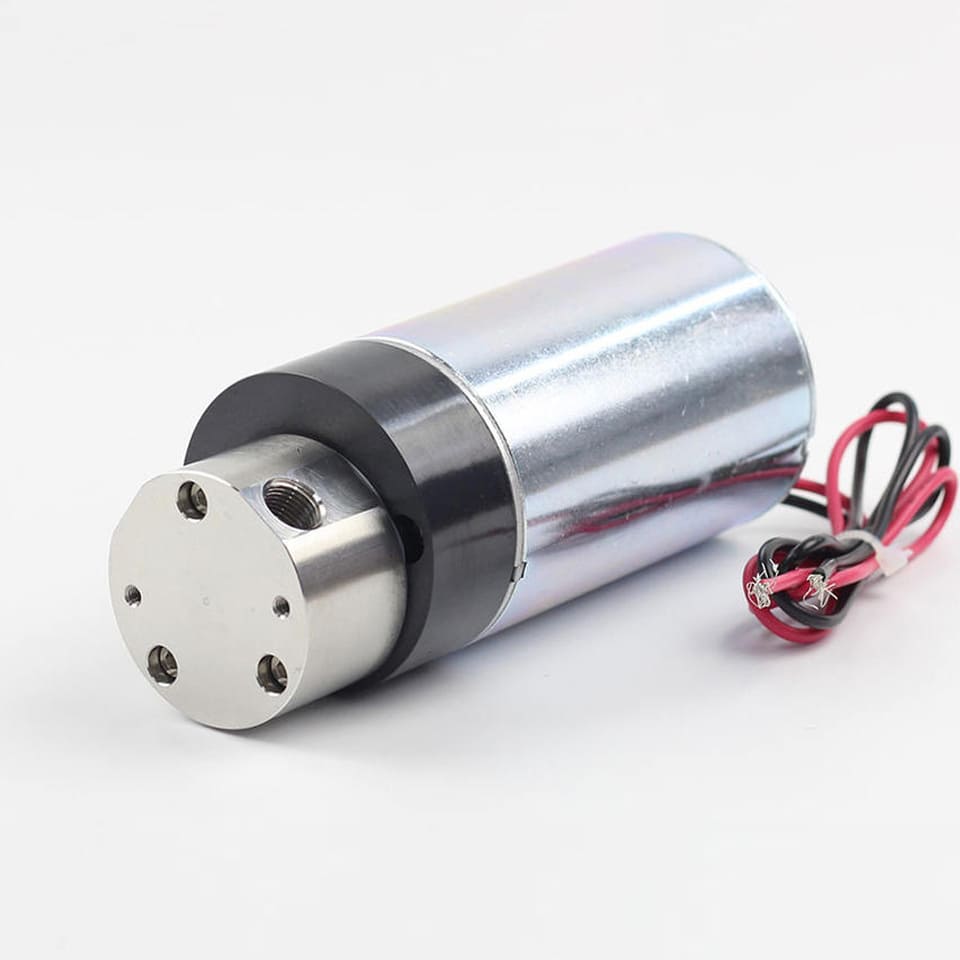
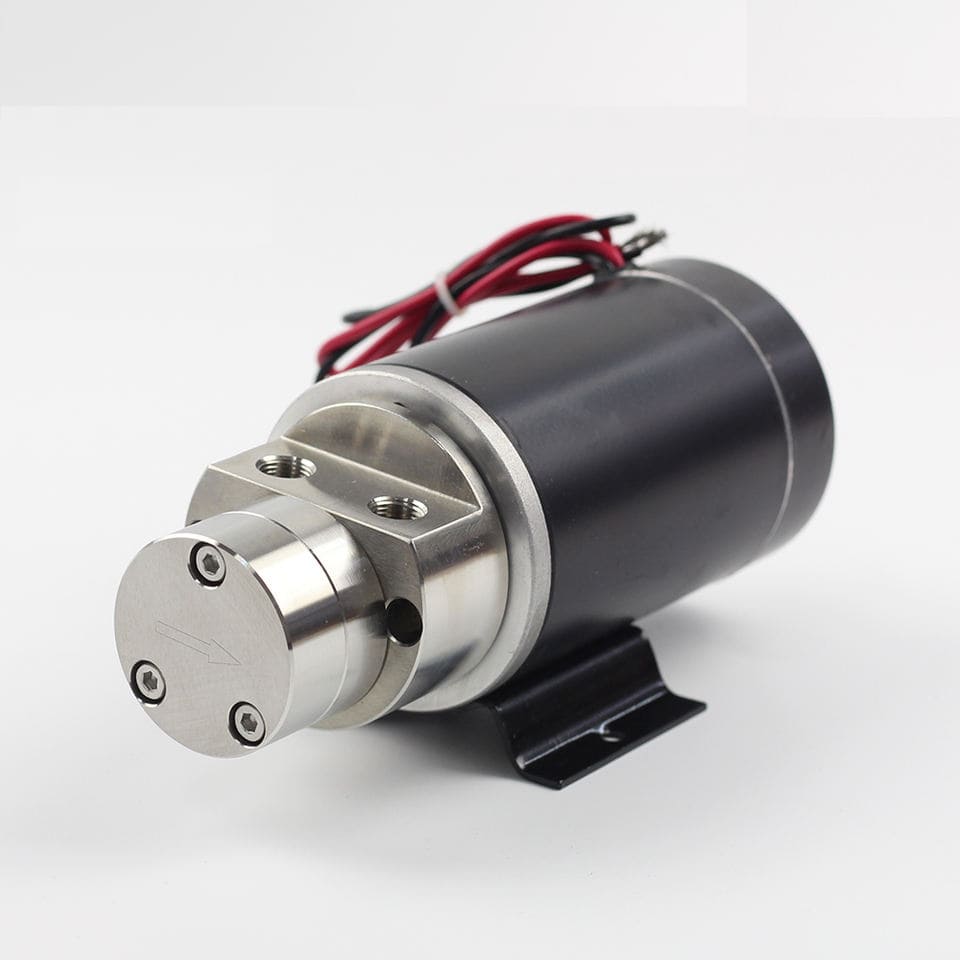
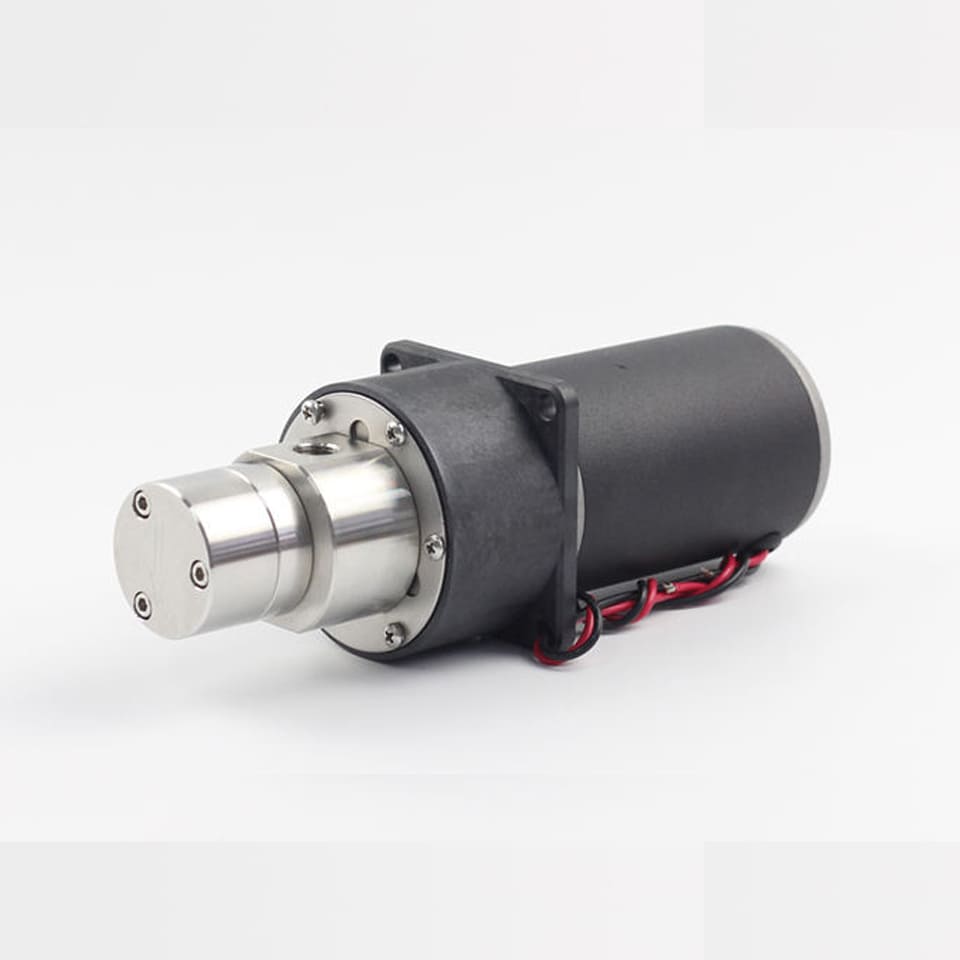
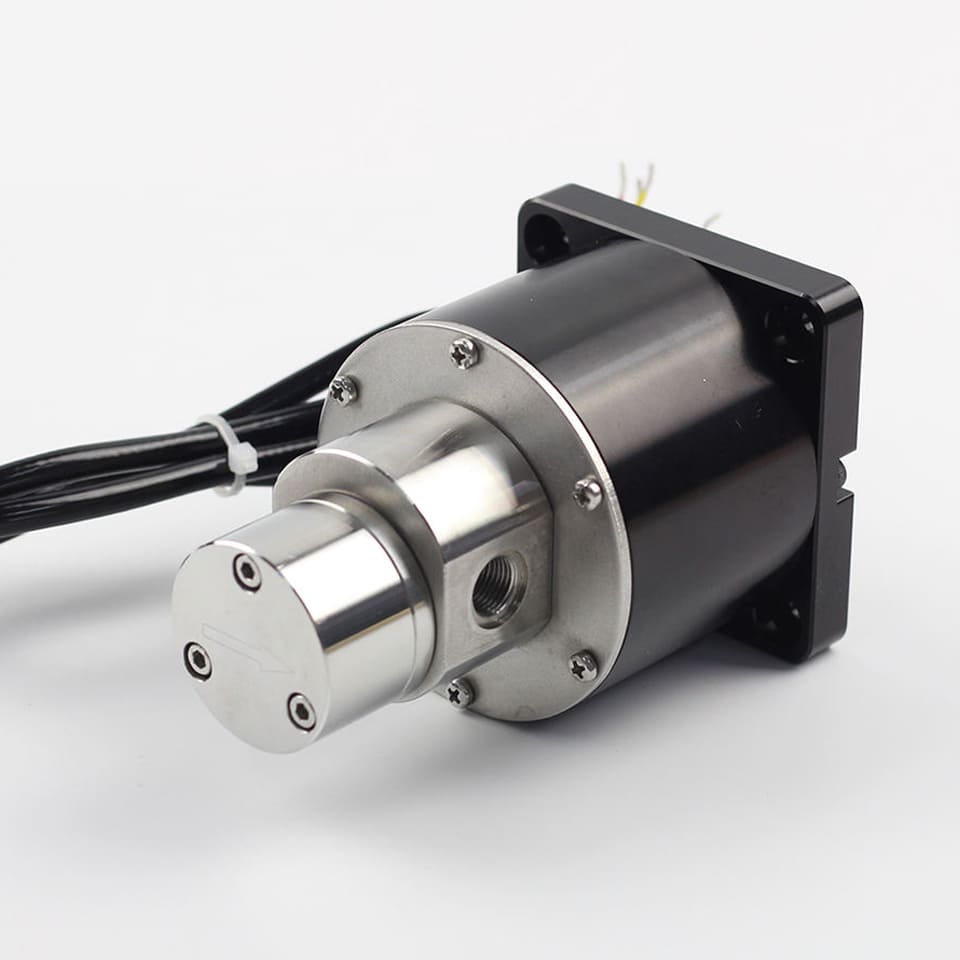
2. Magnetic Drive Gear Pumps
Magnetic drive gear pumps may be considered for selected liquid transfer applications where a gear pump’s operating characteristics are suitable.
The magnetic coupling transfers torque from the motor to the pump mechanism without requiring a conventional dynamic shaft seal between the motor and pump chamber. This design helps reduce potential leakage paths associated with a traditional shaft seal.
For cooling-related applications, engineers should evaluate:
Required flow and operating pressure
Coolant viscosity and temperature
Wetted material compatibility
Liquid cleanliness and particle content
Continuous operating conditions
The pump’s suitability for the intended circulation circuit
A magnetic drive design does not mean that the complete pump system is guaranteed to be leak-free. Static seals, connections and other wetted components still require evaluation.
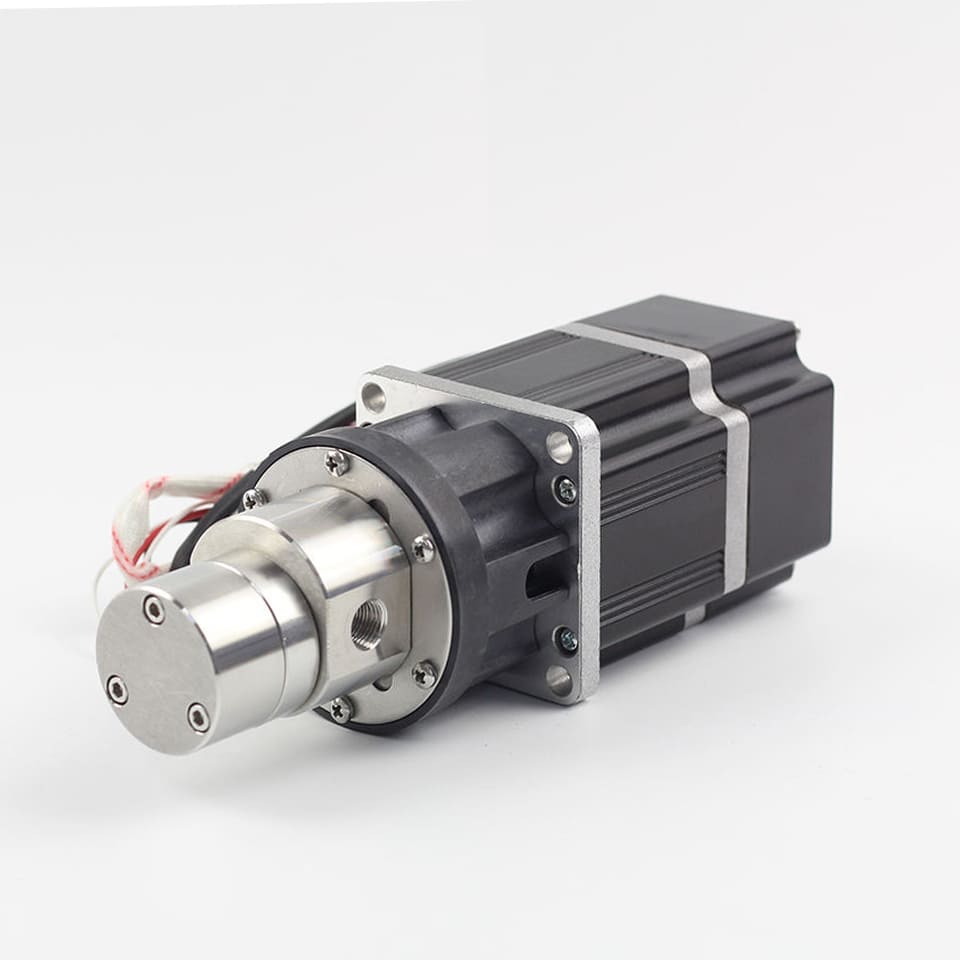
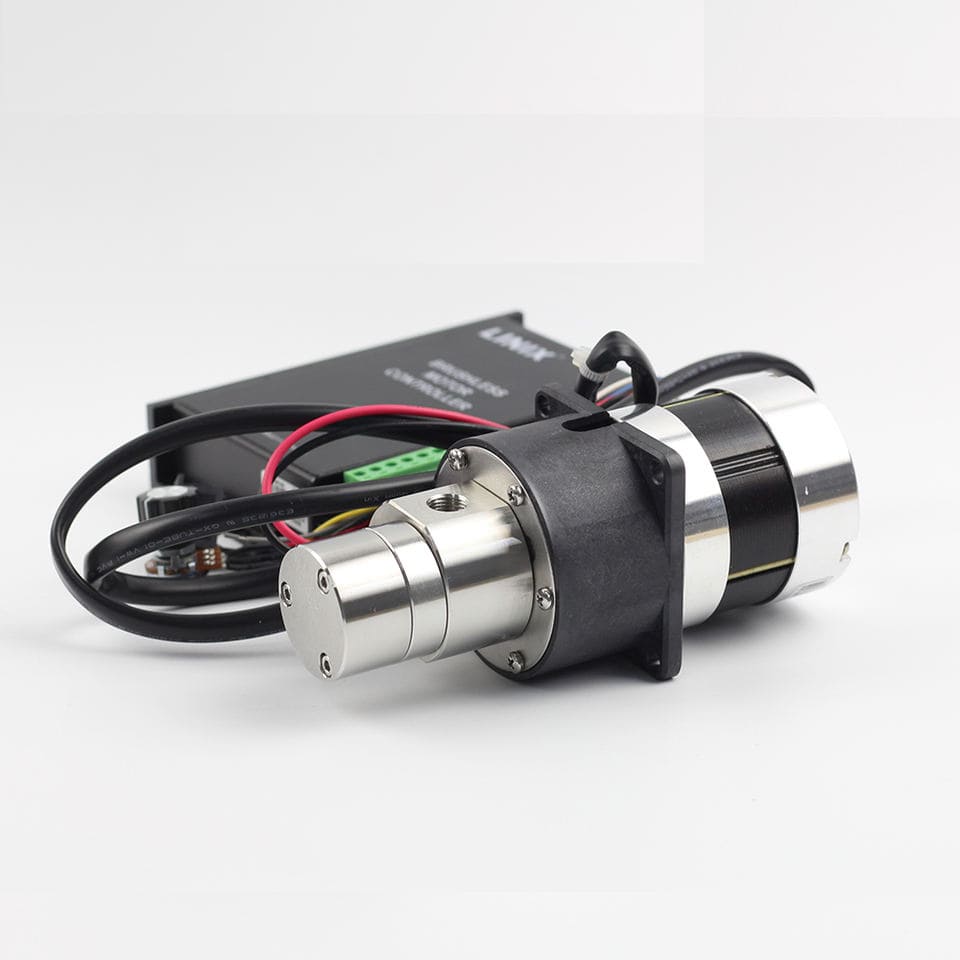
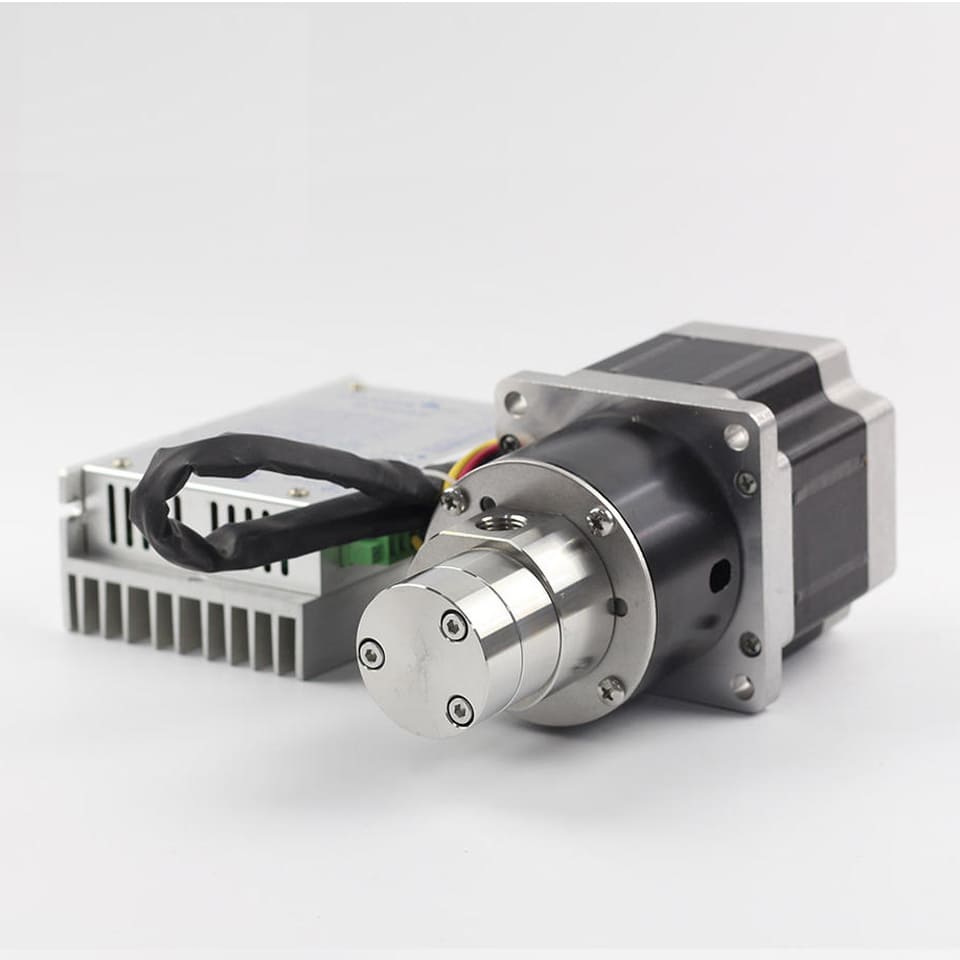
JIGU offers magnetic drive gear pumps with brushless DC motors as a main configuration, while brushed motor options may also be available depending on the model.
Learn more about JIGU Magnetic Drive Gear Pumps.
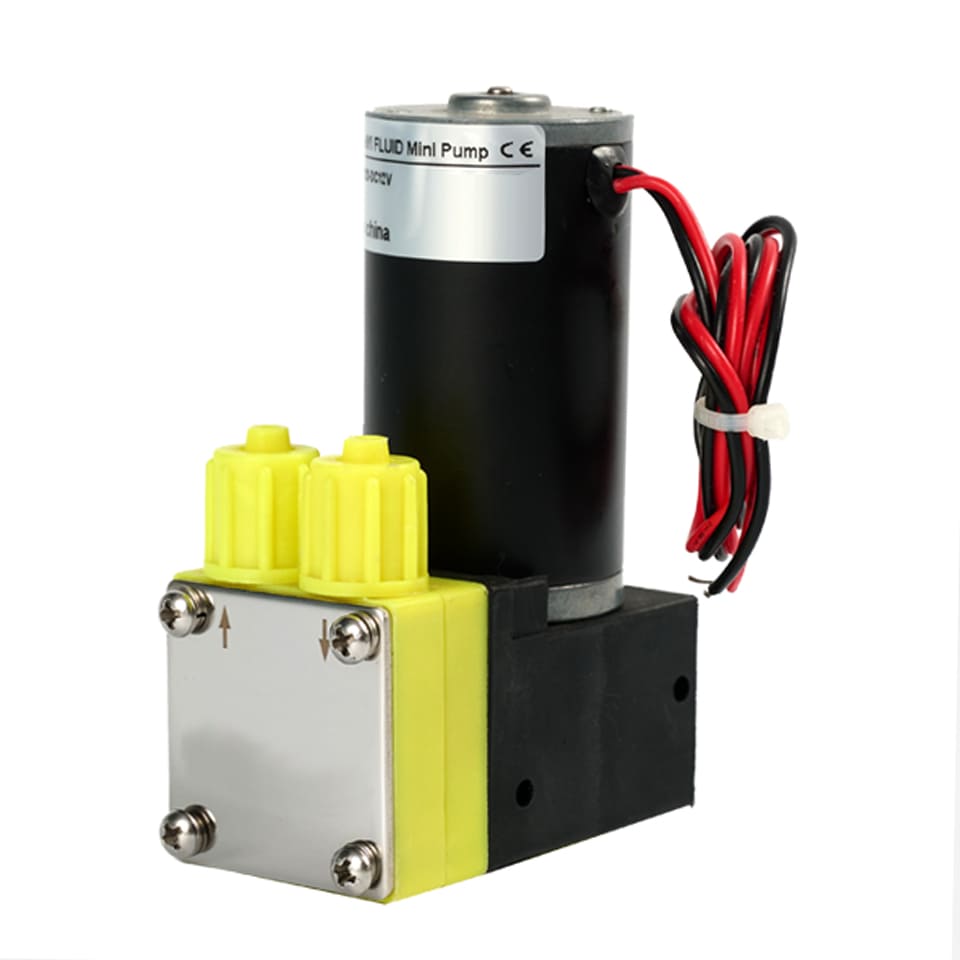
3. Micro Diaphragm Pumps
Micro diaphragm pumps are primarily used for gas handling, vacuum generation and selected liquid transfer applications, depending on their configuration.
They are not generally the first choice for a conventional liquid cooling circulation loop. However, they may be relevant to specific auxiliary functions in equipment that combines liquid cooling with pneumatic control or other fluid-handling requirements.
For example, certain equipment designs may use a diaphragm pump for a separate air supply or vacuum function.
If a diaphragm pump is being considered for liquid handling, the exact model must be checked for liquid compatibility, flow, pressure, operating cycle and material suitability.
Explore JIGU Micro Diaphragm Pumps for more information.
Key Factors When Selecting a Micro Pump for Cooling Systems
Choosing the right micro cooling pump requires an understanding of both the thermal requirements and the hydraulic characteristics of the complete system.
1. Required Flow Rate and Operating Pressure
Flow rate determines how much coolant can circulate through the system over a given period. Pressure represents the pump’s ability to overcome the resistance of the cooling circuit.
A common mistake is selecting a pump based only on its maximum flow rate.
In practice, the actual flow depends on the pump performance curve and the resistance of the system. Tubing length, internal diameter, bends, fittings, valves and heat exchangers can all affect the operating point.
The Hydraulic Institute’s pump and system curve guide explains how the intersection of the pump curve and system curve determines the operating condition.
OEM designers should identify the required flow and corresponding pressure rather than treating maximum flow and maximum pressure as values that can necessarily be achieved at the same time.
For more details, see our guide to Micro Pump Flow Rate and Pressure.
2. Heat Load and Cooling Requirements
The cooling system must remove enough heat to keep the equipment within its intended operating temperature range.
The required coolant flow is related to the heat that needs to be transferred, the coolant’s thermal properties and the permitted temperature difference between the inlet and outlet.
For a liquid cooling circuit, the basic heat transfer relationship is:
Heat transfer rate = Mass flow rate × Specific heat capacity × Temperature difference
This relationship can help engineers estimate the required coolant circulation rate.
However, the actual system design also depends on heat exchanger performance, thermal resistance, component temperature limits and the coolant’s properties.
A pump should therefore be selected as part of the complete thermal management system, not as an isolated component.
3. Coolant Compatibility and Material Selection
The coolant must be compatible with every wetted component of the pump.
Depending on the system, the circulating liquid may be water, a water-glycol mixture or another formulated coolant.
Before selecting a pump, confirm:
Coolant composition and concentration
Operating temperature range
Viscosity
Chemical properties
Potential additives or inhibitors
Compatibility with pump housing, impeller, seals and other wetted components
Do not assume that a pump suitable for water is automatically suitable for every glycol mixture or industrial coolant.
For additional guidance, see our article on Micro Pump Materials and Fluid Compatibility.
4. Operating Temperature and Continuous Operation
Cooling pumps may need to operate for extended periods, depending on the equipment’s duty cycle.
The selected model should be evaluated against:
Minimum and maximum liquid temperatures
Ambient operating temperature
Continuous or intermittent operation
Startup frequency
Available cooling and heat dissipation around the motor
Changes in liquid properties with temperature
A pump’s ability to operate continuously should be confirmed from its model-specific specifications and testing.
For equipment that runs for long periods, testing under representative operating conditions is important for evaluating performance stability and reliability.
5. Noise, Vibration and Reliability
Noise and vibration can affect the overall user experience, especially in laboratory, medical, office and other indoor equipment.
Potential noise sources include motor operation, fluid movement, mechanical vibration and resonance from the equipment structure.
OEM designers should consider:
Pump mounting and vibration isolation
Tubing layout and connection design
Air trapped in the circulation loop
Pump operating conditions
Motor and control configuration
Resonance within the equipment enclosure
Brushless motors eliminate mechanical brush wear, but this does not make a complete pump silent or guarantee a longer service life under every operating condition.
For more information, see Micro Pump Noise and Vibration: Causes and Solutions and Micro Pump Reliability and Service Life.
6. Installation Space and Electrical Requirements
A cooling pump must fit the equipment’s mechanical and electrical design.
Important details include:
Available installation space
Pump dimensions and mounting orientation
Inlet and outlet positions
Tubing size and connection type
Supply voltage and current
Startup current and control requirements
Wiring and connector configuration
Some OEM systems may require speed adjustment or electronic control. Whether this is possible depends on the specific pump model, motor driver and electrical interface.
These details should be confirmed before finalizing the pump selection.
OEM Cooling Pump Integration and Customization
For equipment manufacturers, selecting a pump is only one part of the development process. The pump must also be integrated into the equipment’s mechanical structure, electrical system and cooling circuit.
Depending on the selected model and engineering evaluation, OEM requirements may involve:
Flow rate and pressure configuration
Brushless or brushed motor options
Supply voltage and electrical connections
Pump housing and wetted material selection
Inlet and outlet connection design
Installation dimensions and mounting requirements
Wiring, connectors and control interfaces
Not every pump model supports every customization option. Each requirement needs to be evaluated against the existing pump design and the intended operating conditions.
When requesting a cooling pump solution, OEM manufacturers can provide:
Equipment type and cooling application
Coolant type and operating temperature
Required flow rate and pressure
Cooling circuit layout or tubing information
Available installation dimensions
Power supply and control requirements
Expected operating cycle
If complete specifications are not available, an application description, equipment photos, a circuit diagram or an existing pump sample can still help start the discussion.
JIGU provides micro pump solutions for OEM equipment manufacturers. You can also read our guide to Micro Pump Customization to understand the information needed for a customized pump project.
Common Mistakes When Selecting a Cooling Pump
Several selection mistakes can affect cooling performance and long-term system reliability.
1. Selecting a pump only by maximum flow rate
The maximum flow rating does not necessarily represent the flow available in the actual cooling circuit. Always check the pump’s performance under the required pressure.
2. Ignoring system resistance
Tubing, fittings, valves, cooling channels and heat exchangers all contribute to pressure loss. These components must be considered when estimating the operating point.
3. Assuming all coolants are compatible
Water, glycol mixtures and other formulated coolants may have different chemical and physical properties. Confirm compatibility with the pump’s wetted materials.
4. Overlooking operating temperature
A pump that works under room-temperature conditions may behave differently at higher or lower liquid temperatures. Temperature limits should be checked for the complete pump assembly.
5. Evaluating the pump separately from the equipment
A suitable pump must work with the complete cooling circuit. Testing should include the actual tubing, cooling components, coolant and expected operating conditions whenever possible.
Frequently Asked Questions
1. What Type of Micro Pump Is Best for a Cooling System?
For many compact liquid cooling circuits, a micro centrifugal water pump is a suitable starting point because it is designed for liquid circulation.
However, the best choice depends on the required flow, pressure, coolant properties and system resistance. Other pump technologies may be considered for specific applications.
2. Can a Micro Centrifugal Pump Be Used for Continuous Cooling?
Some micro centrifugal pumps can be used in continuous circulation applications, but continuous operation must be confirmed for the specific model.
Operating temperature, liquid properties, system pressure and installation conditions should all be considered.
3. How Do I Calculate the Required Flow Rate for a Cooling Pump?
The required flow rate depends on the heat load, the coolant’s specific heat capacity and the permitted temperature difference across the cooling circuit.
Engineers can use the heat transfer relationship between mass flow, specific heat and temperature difference to estimate the required circulation rate.
The result should then be evaluated against the pump’s performance curve and the system’s pressure losses.
4. Can a Micro Pump Circulate Glycol-Based Coolant?
It depends on the pump model and the coolant formulation.
Glycol concentration, viscosity, temperature and chemical additives can affect pump performance and material compatibility. The selected pump should be checked against the exact coolant before use.
5. What Should OEM Manufacturers Consider When Selecting a Cooling Pump?
Key considerations include required flow and pressure, heat load, coolant compatibility, operating temperature, continuous operation, noise, installation dimensions and electrical requirements.
It is also important to test the pump in the actual or representative cooling circuit.
6. Can JIGU Customize Micro Pumps for Cooling Applications?
JIGU offers micro pump solutions for OEM equipment manufacturers. Depending on the selected model and engineering evaluation, requirements such as motor configuration, voltage, connections, installation dimensions and performance may be discussed.
OEM manufacturers can share their application details and technical requirements for an initial evaluation.
Looking for a Micro Pump for Your Cooling System?
Choosing a suitable micro pump is an important step in developing a reliable cooling system. The right solution depends on the required circulation performance, coolant properties, operating temperature and equipment integration requirements.
JIGU manufactures micro centrifugal water pumps, micro diaphragm pumps and magnetic drive gear pumps for different OEM applications.
If you are developing a compact cooling unit, laser cooling system, electronic device or other equipment requiring liquid circulation, contact our team to discuss your application.
Contact JIGU for OEM Micro Pump Solutions
Related Products
Reach Out Today
Looking for a micro pump manufacturer for your project? Contact JIGU Pump to discuss your application requirements and get a suitable pump recommendation and quotation.

Share Your Requirements
Share your application requirements, technical specifications, drawings, or reference images with our team.

Receive a Solution & Quotation
Our team will review your requirements and provide a suitable pump recommendation and quotation.

Confirm & Start Production
After sample approval and order confirmation, we proceed with production and arrange shipment according to the agreed schedule.