
Micro Pump Flow Rate and Pressure: How to Understand Pump Performance
Micro Pump Flow Rate and Pressure: How to Understand Pump Performance
When selecting a micro pump for OEM equipment, two of the most important specifications are flow rate and pressure. However, comparing these two values separately can lead to an unsuitable pump selection.
Understanding micro pump flow rate and pressure is essential for matching a pump to the actual operating requirements of OEM equipment.
A pump’s actual flow rate depends on the pressure or resistance it works against. The relationship between flow and pressure varies according to the pump type, operating speed, liquid or gas properties and system design.
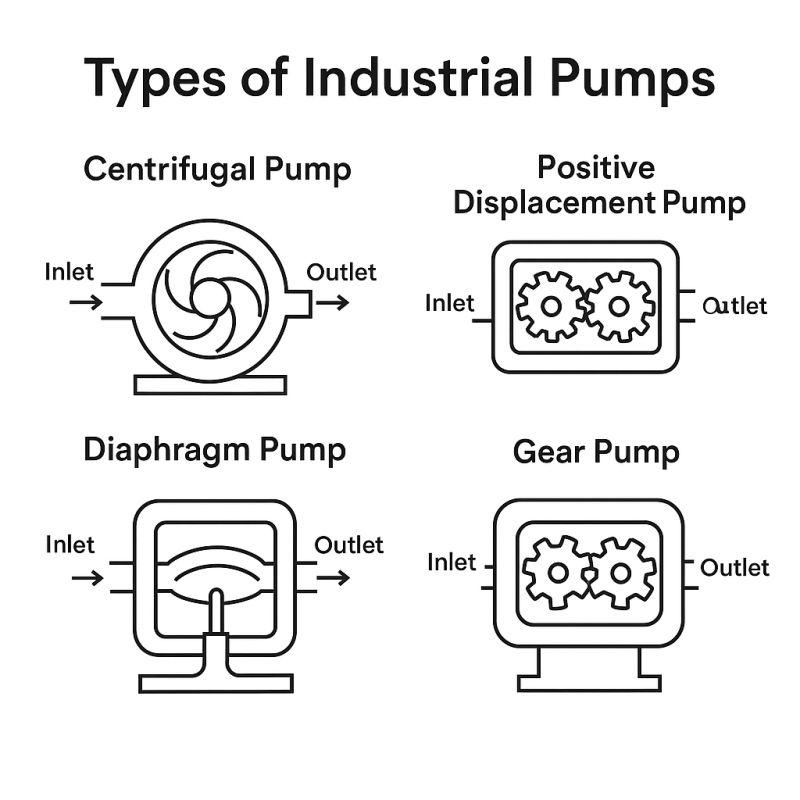
For example, a centrifugal water pump generally delivers less flow as system resistance increases. A positive-displacement pump, such as a diaphragm or gear pump, tends to maintain a more consistent displacement per revolution or cycle, although actual flow can decrease as pressure increases due to internal leakage, slip or other operating effects.
Understanding these differences helps equipment manufacturers select a pump based on real operating conditions rather than maximum specifications alone.
1. What Do Flow Rate and Pressure Mean in Pump Selection?
Flow rate and pressure describe different aspects of pump performance. Both are necessary when evaluating a pump for an OEM application.
What Is Pump Flow Rate?
Flow rate is the volume of liquid or gas that a pump delivers over a given period.
Common units include:
L/min (liters per minute)
mL/min (milliliters per minute)
m³/h (cubic meters per hour)
L/h (liters per hour)
CFM (cubic feet per minute), commonly used for gas flow
For example, a liquid pump rated at 2 L/min is designed to deliver a nominal volume of two liters per minute under specified test conditions.
However, the actual flow rate in an equipment system may be different because of operating pressure, tubing resistance, liquid viscosity, temperature and other factors.
When requesting a pump, it is more useful to specify the required flow rate at the intended operating conditions rather than only asking for the maximum flow rate.
What Is Pump Pressure?
Pressure describes the force exerted by a fluid per unit area. In pump applications, it is commonly used to describe the pressure increase required to move a liquid or gas through a system.
Common pressure units include:
kPa (kilopascals)
bar
MPa (megapascals)
psi (pounds per square inch)
For liquid pumps, engineers may also use head, usually expressed in meters or feet of liquid.
Pressure and head are related, but they are not interchangeable without considering fluid density. For a given liquid, pressure difference can be converted to head using the liquid’s density and gravitational acceleration.
For gas diaphragm pumps, specifications may include positive pressure or vacuum level. These should be interpreted according to the manufacturer’s stated reference, such as gauge pressure or absolute pressure.
Why Flow Rate and Pressure Must Be Considered Together
A pump does not necessarily deliver its maximum flow rate at its maximum pressure.
The actual performance depends on how the pump interacts with the connected system.
For example, a pump may deliver a higher flow rate when connected to a low-resistance circuit, but the flow may decrease when tubing becomes longer, filters become restricted or valves introduce additional resistance.
For this reason, the required operating point is more important than either maximum flow or maximum pressure considered separately.
2. What Is a Pump Performance Curve?
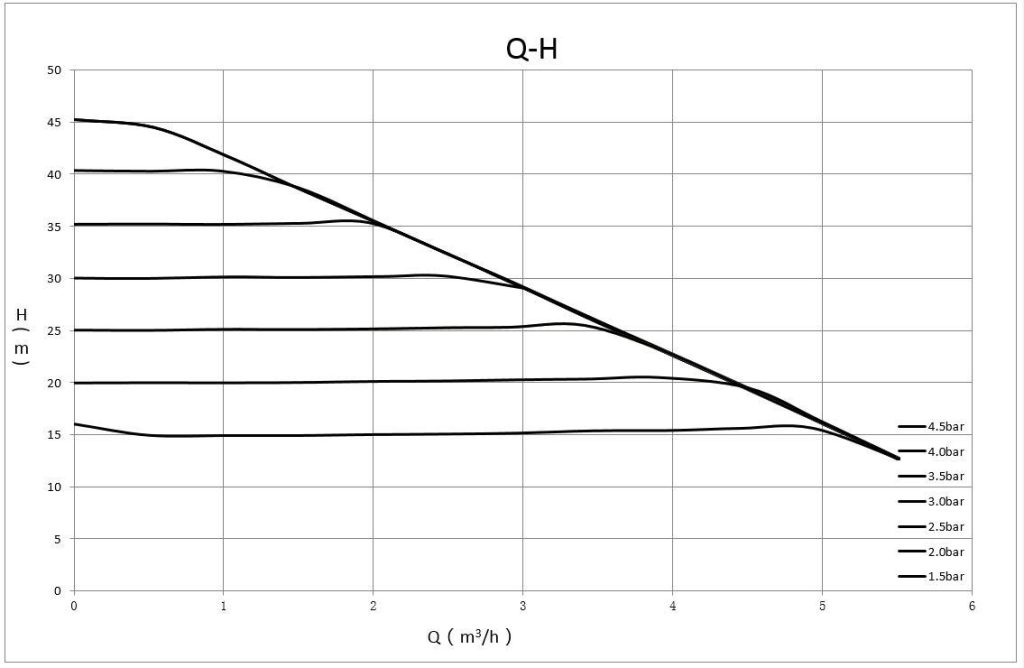
A pump performance curve is a graphical representation of pump performance under defined operating conditions. It helps engineers understand how flow rate changes with pressure or head.
For centrifugal pumps, the most familiar performance curve shows flow rate on the horizontal axis and head on the vertical axis. Additional curves may show efficiency, power consumption and suction requirements.
Positive-displacement pumps, including diaphragm and gear pumps, have different performance characteristics. Their curves and specifications should be interpreted according to the pump design and the manufacturer’s test data.
The U.S. Department of Energy’s pumping system guide also explains how backpressure and system conditions affect pump flow and performance.
Understanding a Centrifugal Pump Curve
For a typical centrifugal pump operating at a fixed speed and impeller diameter, the developed head generally decreases as flow rate increases.
This means that when system resistance increases, the operating flow usually decreases.
The curve helps engineers determine whether a centrifugal pump can provide the required flow at the system’s operating head.
It is important to use the performance curve for the correct pump model, speed and configuration. A curve for one model should not be applied to another model simply because the pumps have similar dimensions.
Understanding Positive-Displacement Pump Performance
Diaphragm pumps and gear pumps operate using positive-displacement principles.
A diaphragm pump moves fluid through repeated chamber expansion and compression. A gear pump moves liquid through the spaces between rotating gear teeth and the pump housing.
For a given pump configuration and operating speed, the theoretical displacement is related to the pump’s geometry and operating cycle.
Actual delivered flow may decrease as the pressure difference increases because of internal leakage, valve behavior, deformation, fluid properties and other factors.
Therefore, a positive-displacement pump should not be assumed to deliver exactly the same flow at every pressure.
Why Different Pump Types Have Different Curves
The relationship between flow and pressure is influenced by the pumping mechanism.
Centrifugal pumps: Flow generally decreases as required head increases at a fixed speed.
Diaphragm pumps: Flow is related to displacement and operating frequency, but actual output depends on pressure, valves, medium and pump configuration.
Gear pumps: Flow is related to displacement and rotational speed, while internal slip and liquid properties affect actual output.
This is why engineers should review the performance information for the specific pump type rather than applying one general curve to every micro pump.
3. What Is the Operating Point of a Pump?
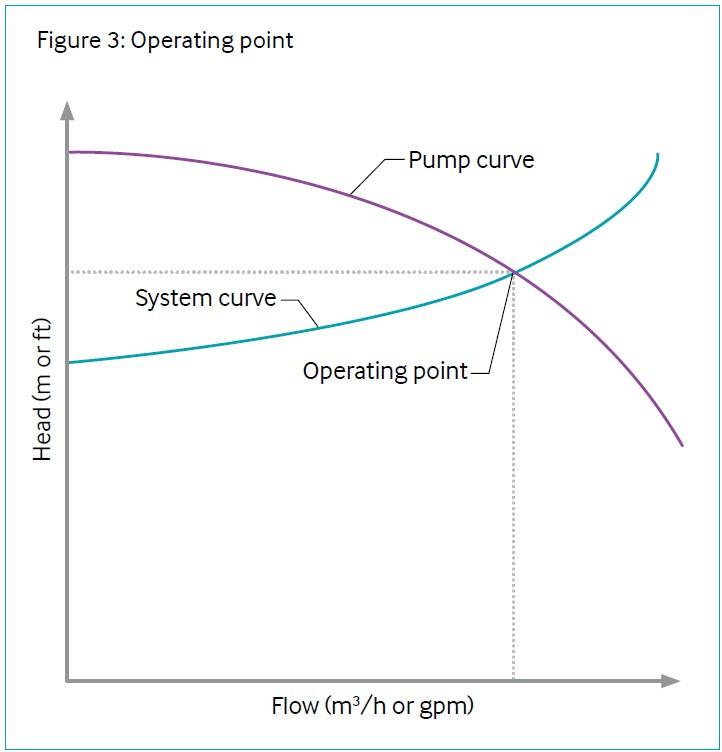
The operating point is the actual combination of flow rate and pressure or head at which a pump operates in a particular system.
For a centrifugal pump, the operating point is generally determined by the intersection of the pump performance curve and the system curve.
The system curve represents the pressure or head required by the connected system at different flow rates.
For a more detailed explanation, see the Hydraulic Institute’s guide to combined pump and system curves
Understanding the System Curve
A pumping system creates resistance through components such as:
Tubing and pipes
Elbows and connectors
Filters
Valves
Heat exchangers
Other fluid circuit components
As flow increases, friction and pressure losses in many liquid systems also increase.
The system curve represents this relationship, together with any static head or independent pressure requirement.
For a centrifugal pump, the intersection of the pump curve and system curve indicates the operating point.
The actual operating point may change if the system configuration, valve position, liquid properties or pump speed changes.
How System Resistance Affects Pump Performance
Consider a compact liquid circulation system with a pump, tubing, a filter and a heat exchanger.
If the tubing becomes longer or the filter becomes restricted, the system resistance increases. A centrifugal pump may then operate at a lower flow rate.
In a positive-displacement pump, increased pressure difference may cause greater internal leakage or slip, reducing actual delivered flow. The resulting behavior depends on the pump design.
This is why the complete fluid circuit should be considered during OEM pump selection.
4. How Flow Rate and Pressure Differ Across Micro Pump Types
Different pump technologies respond differently to system conditions. Understanding these differences helps narrow down the right pump for an application.
Micro Centrifugal Water Pumps
Micro centrifugal water pumps are commonly used for liquid circulation and water transfer.
Their flow and head characteristics depend on impeller design, rotational speed and the resistance of the connected system.
As system resistance increases, the operating flow generally decreases.
When selecting a micro centrifugal water pump, engineers should identify the required flow rate at the actual system head rather than relying only on the maximum flow specification.
Learn more about micro centrifugal water pump applications.
Micro Diaphragm Pumps
Micro diaphragm pumps can be configured for liquid or gas applications.
Their actual flow depends on diaphragm displacement, operating frequency, valve design, pressure difference and the properties of the medium.
For gas applications, positive-pressure and vacuum performance should be evaluated separately. Some models are designed for positive pressure, some for vacuum, and certain configurations may support both.
When selecting a gas diaphragm pump, provide the required flow at the intended pressure or vacuum level. Maximum free-air flow should not be assumed to represent the flow available under pressure or vacuum.
For liquid diaphragm pumps, the medium, viscosity, temperature and valve configuration also affect performance.
See our guide to micro diaphragm pump selection.
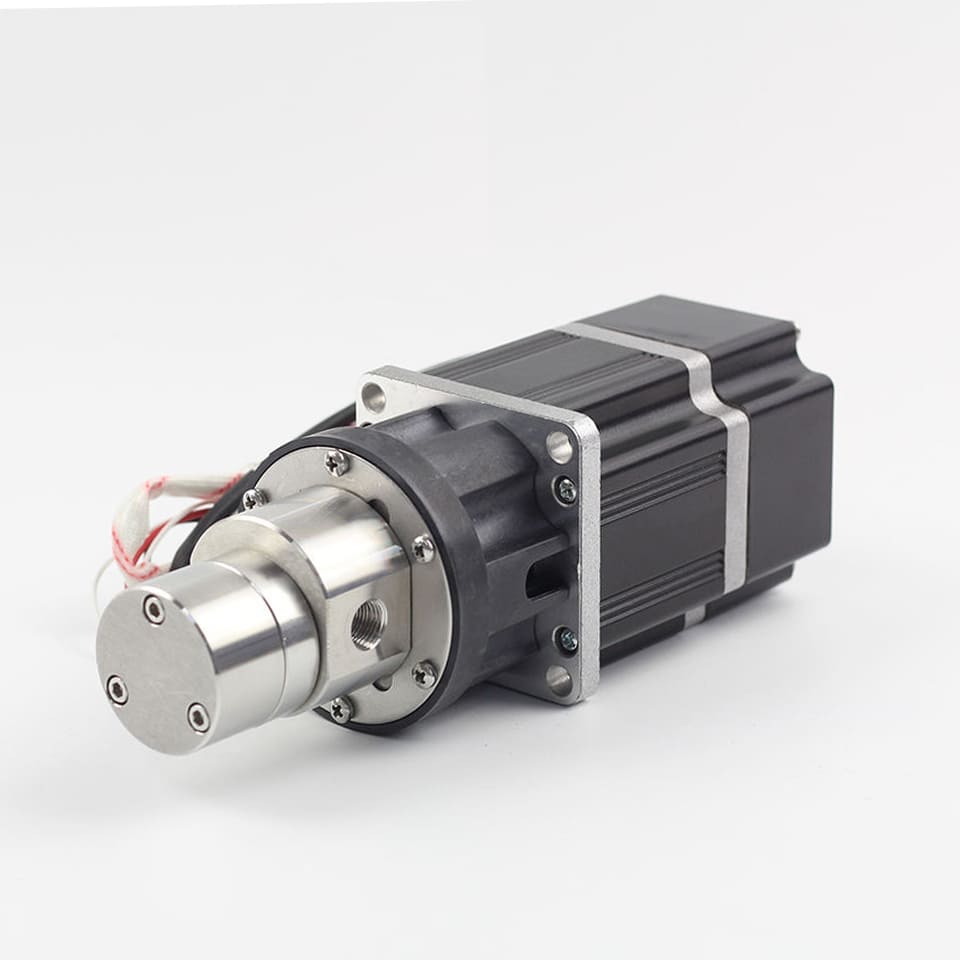
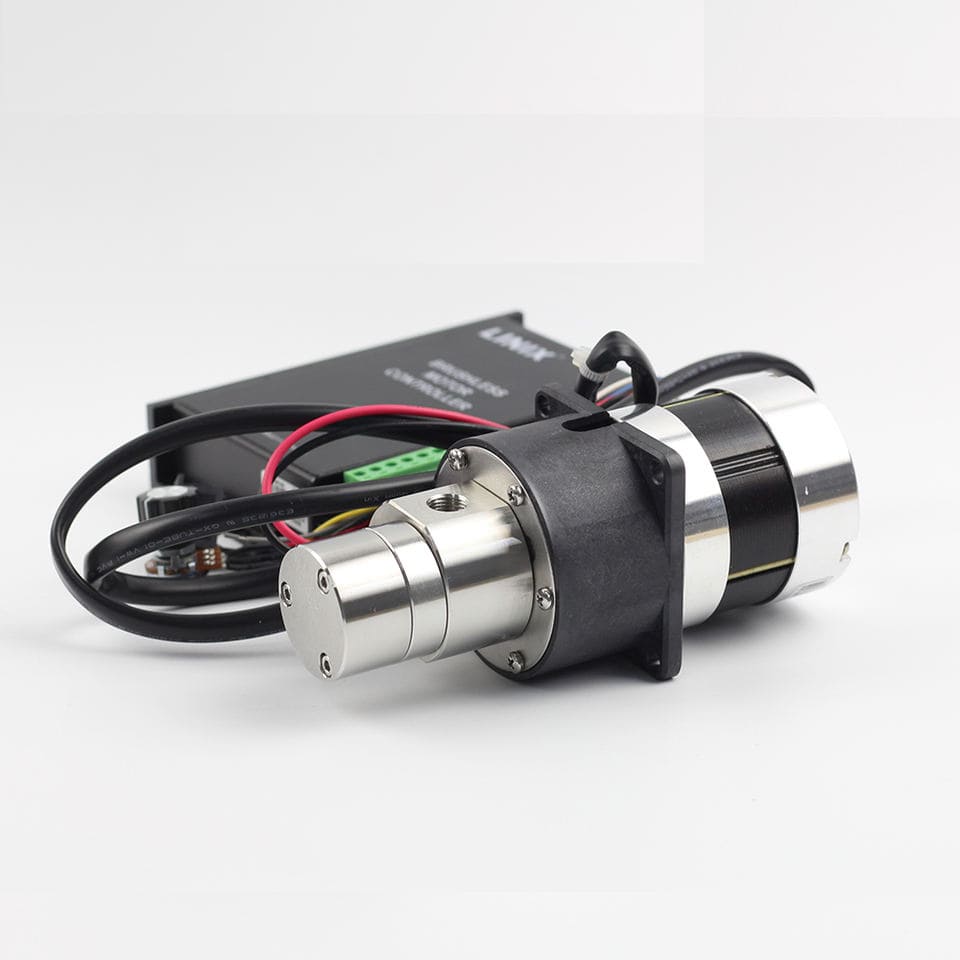
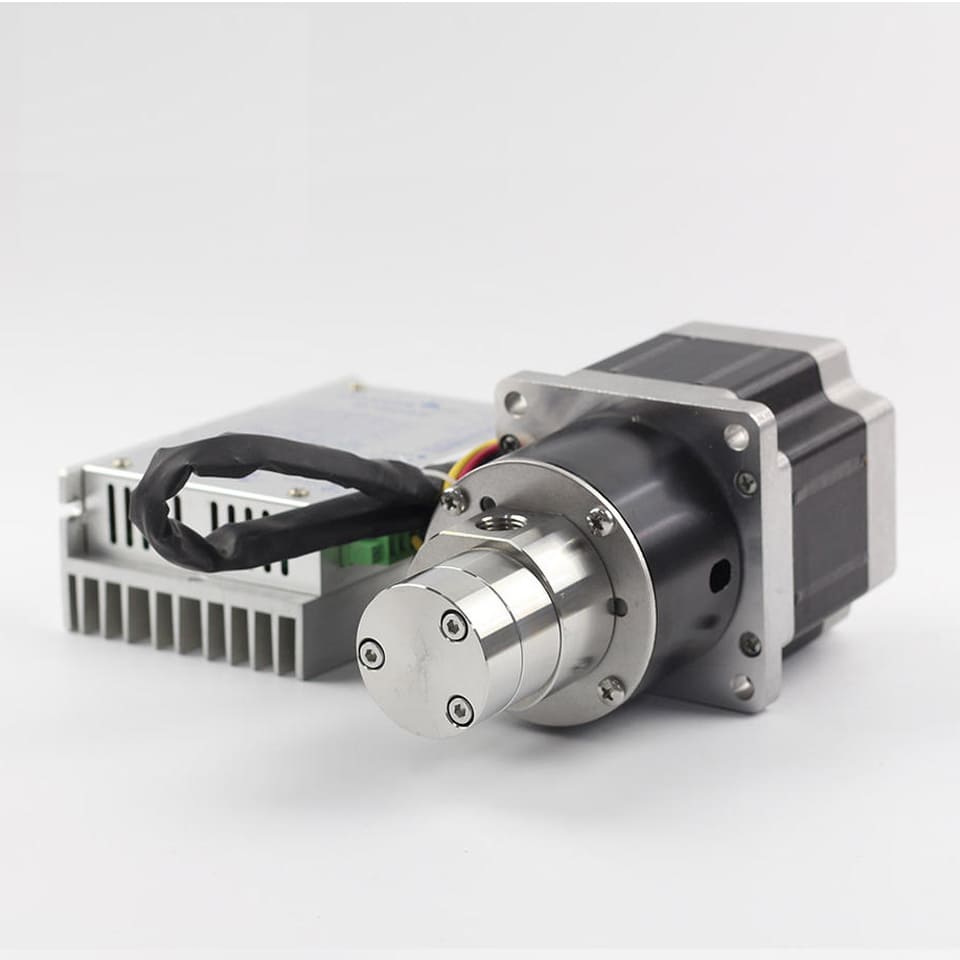
Magnetic Drive Gear Pumps
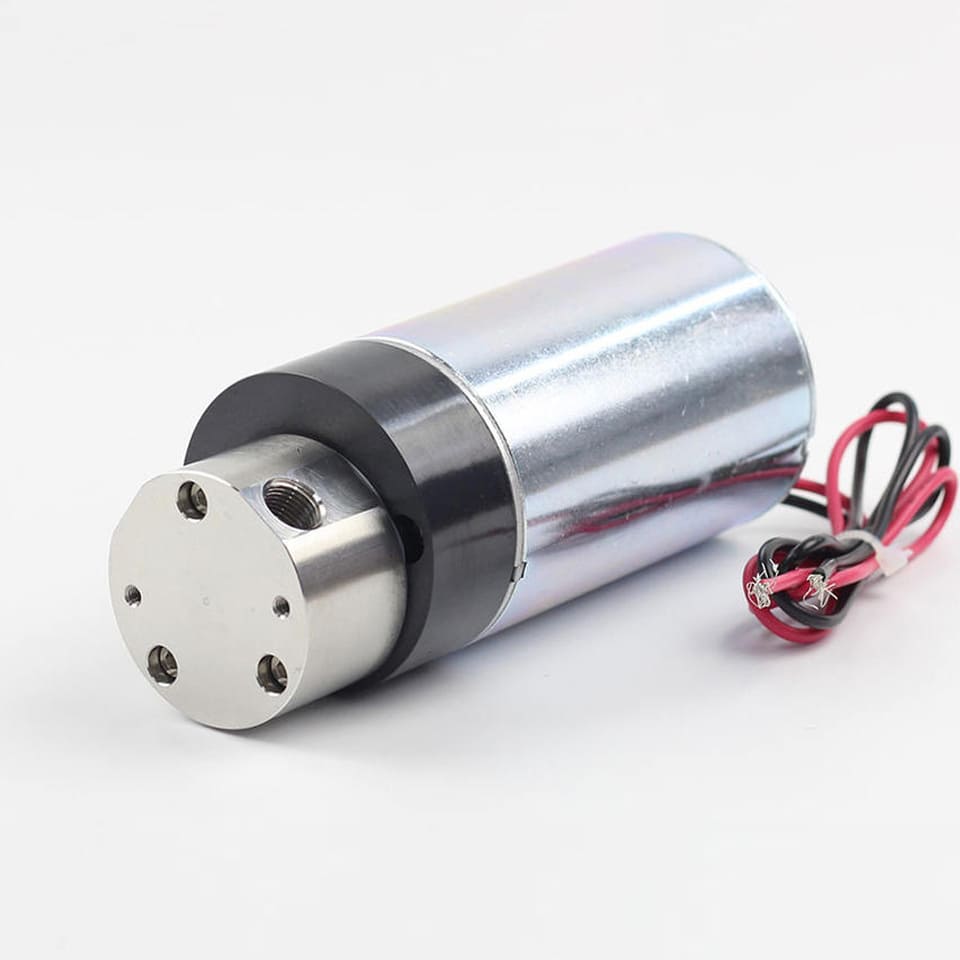
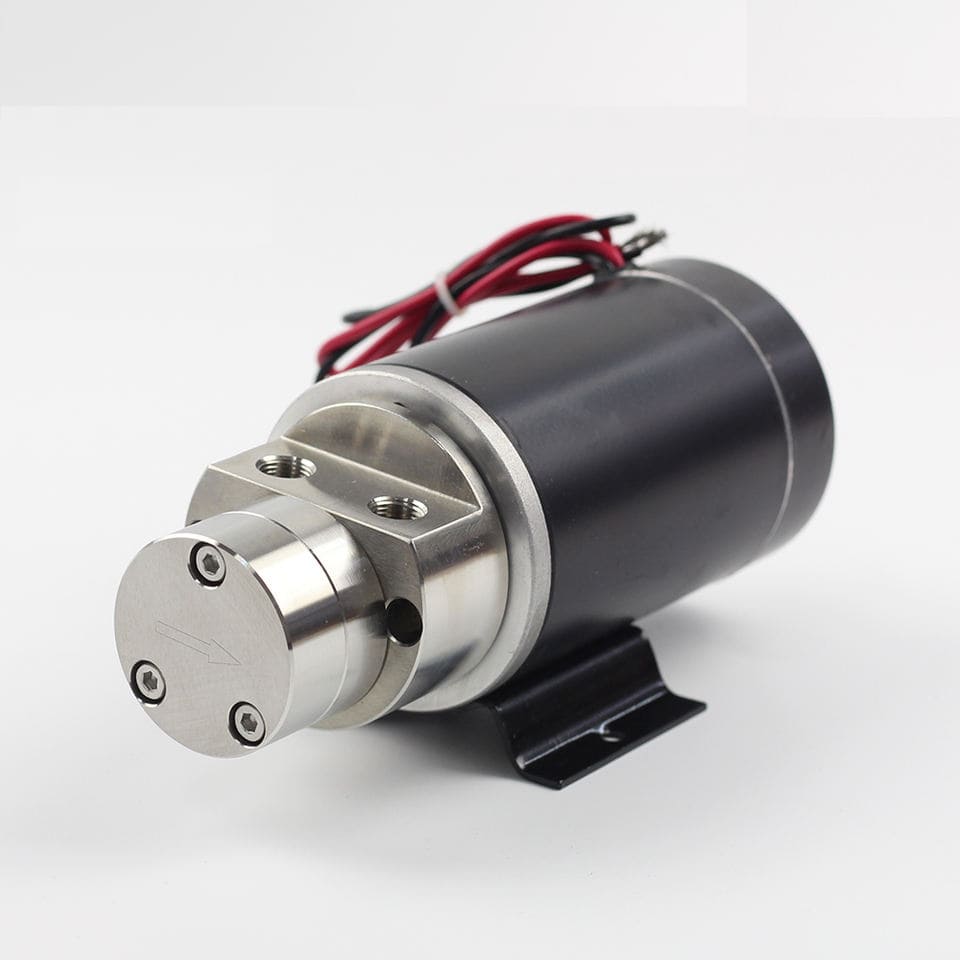
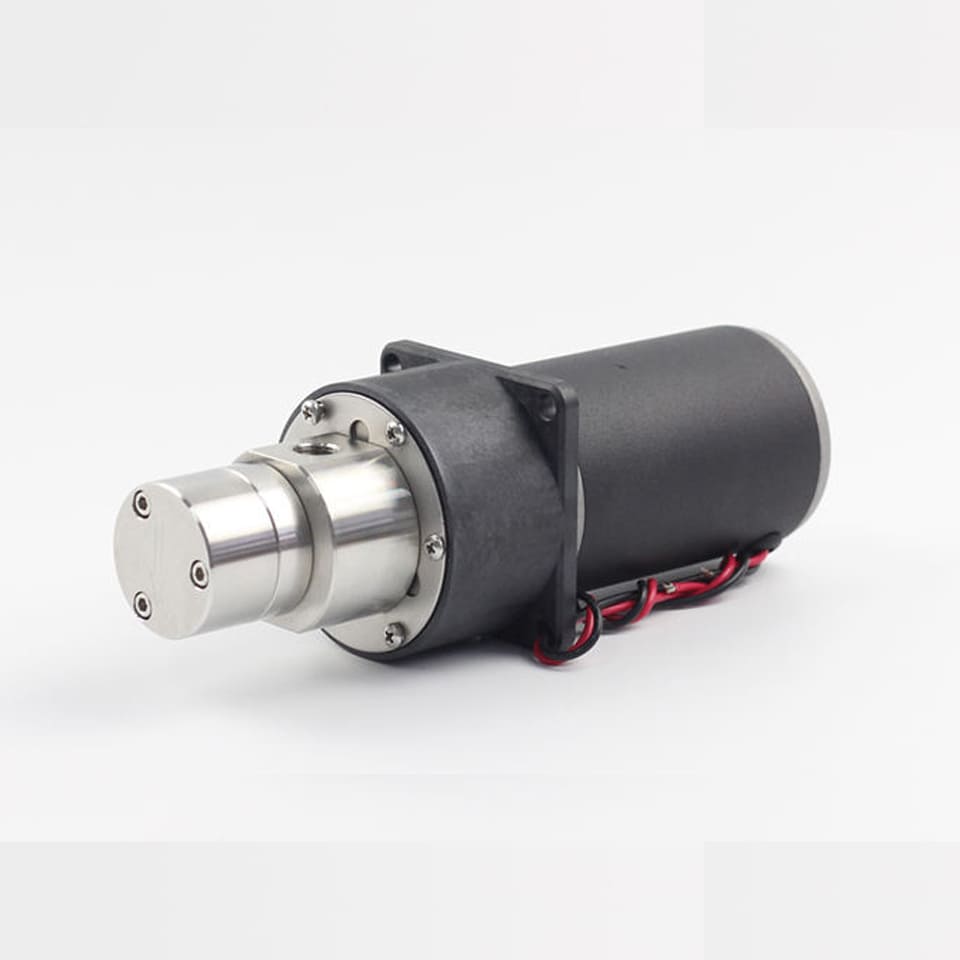
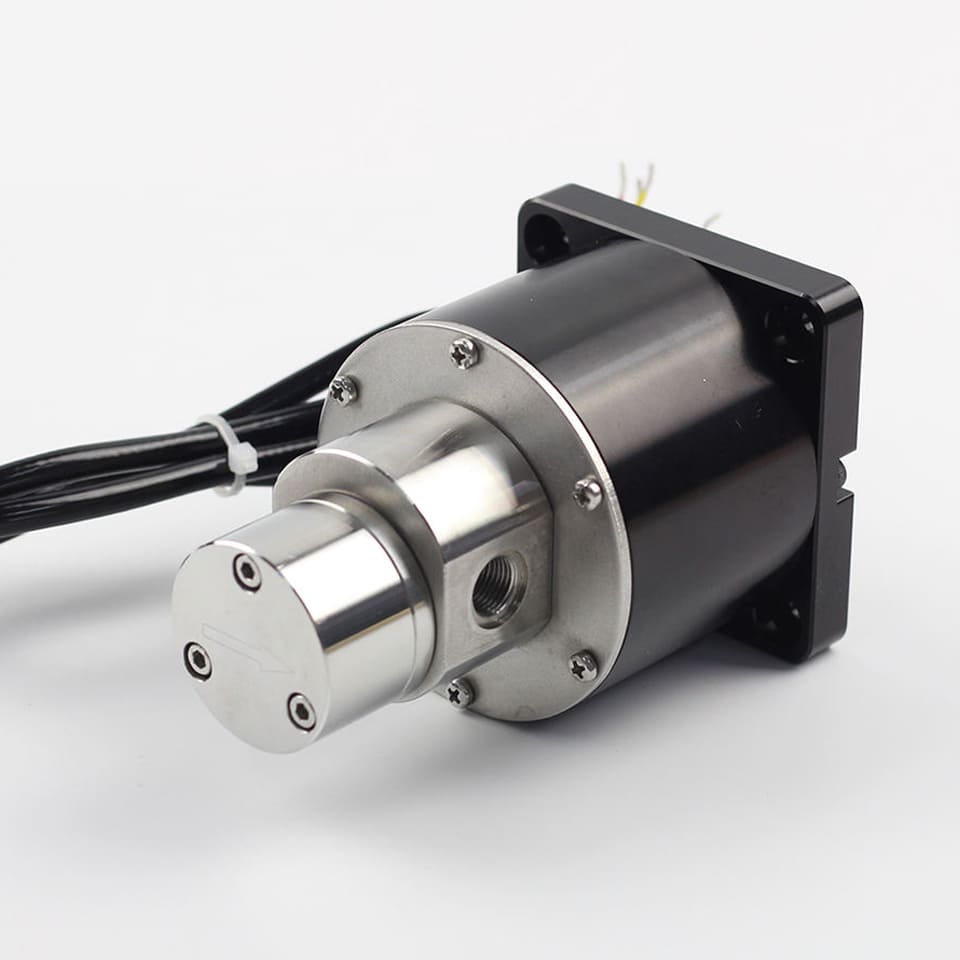
Magnetic drive gear pumps use rotating gears to transfer liquid through a positive-displacement mechanism. The magnetic coupling transfers torque from the motor to the pump mechanism without a conventional dynamic shaft seal between the motor and pump chamber.
For a given gear pump configuration, flow is related to displacement and rotational speed. However, actual flow is affected by internal slip, pressure difference, liquid viscosity, temperature and internal clearances.
When selecting a magnetic drive gear pump, it is important to confirm the required flow at the actual operating pressure and liquid viscosity.
Learn more about magnetic drive gear pump selection.
5. Common Mistakes When Comparing Pump Flow and Pressure
Comparing pump specifications without considering operating conditions can lead to incorrect selection.
Comparing Maximum Flow Rates Only
Maximum flow is often measured under low-resistance or otherwise specified test conditions.
It does not necessarily represent the flow a pump can deliver in an actual system.
Always ask for the flow rate at the required pressure or operating condition.
Assuming Maximum Flow and Maximum Pressure Are Available Together
Maximum flow and maximum pressure are often separate performance limits.
A pump may achieve its maximum flow under one condition and its maximum pressure under another.
Request the performance data that shows the relationship between these values.
Ignoring Tubing and System Resistance
Tubing length, diameter, connectors, filters and valves can all affect the pressure loss in a liquid circuit.
For gas applications, tubing dimensions, restrictions, leakage and the required pressure or vacuum level also influence actual performance.
The pump should be evaluated as part of the complete system.
Ignoring Liquid or Gas Properties
Viscosity, density, temperature and chemical properties can influence pump performance and material compatibility.
For example, a gear pump’s actual output can be affected by liquid viscosity and internal slip. A diaphragm pump’s flow can also be influenced by the medium and valve behavior.
The operating medium should always be identified during pump selection.
Using a Performance Curve from a Different Model
Performance data is specific to a pump configuration and its test conditions.
Differences in motor speed, impeller or gear design, materials, valves and other components can change the results.
Use the curve or test data for the exact model and configuration being evaluated.
6. How to Select a Micro Pump Based on Flow and Pressure
A practical selection process starts with the equipment’s actual requirements.
Define the Required Operating Flow
Identify the flow rate needed by the equipment during normal operation.
If the flow varies, provide the minimum, normal and maximum requirements where possible.
Confirm the Required Pressure or Vacuum
For liquid applications, identify the operating pressure difference or required head.
For gas applications, specify whether the pump needs to generate positive pressure, vacuum or both.
Clarify whether the stated pressure is gauge pressure or absolute pressure when relevant.
Identify the Complete System Conditions
Provide information about the connected system, including:
Tubing length and internal diameter
Inlet and outlet connections
Filters, valves and other restrictions
Static height difference, if applicable
Operating temperature
Expected duty cycle
These details help estimate the pressure or resistance the pump must overcome.
Confirm the Medium and Pump Configuration
Identify whether the pump handles water, another liquid or gas.
For liquids, provide viscosity, chemical composition, temperature and any particle content.
For gas applications, provide the gas type and required pressure or vacuum range.
The selected pump materials and configuration must be suitable for the medium.
Evaluate Performance Under Actual Conditions
Once the basic requirements are defined, compare the pump’s performance data with the target operating point.
If a complete performance curve is unavailable, ask the manufacturer for test data at the required flow and pressure.
Sample testing under representative equipment conditions can help confirm whether the selected pump meets the application requirements.
7. What Information Should You Provide When Requesting a Micro Pump?
To help a pump manufacturer evaluate a suitable model, prepare the following information:
| Information | Example or Description |
| Pump type | Centrifugal, diaphragm or gear pump |
| Medium | Water, coolant, chemical liquid, air or other gas |
| Required flow | L/min, mL/min or L/h |
| Operating pressure | kPa, bar or psi |
| Vacuum requirement | Required vacuum level, if applicable |
| Voltage | Available DC power supply |
| Operating conditions | Temperature and duty cycle |
| Installation | Available space and mounting requirements |
| Connections | Inlet, outlet and tubing specifications |
If some information is not yet available, you can still start with the equipment application, a description of the pumping function and the known performance targets.
JIGU can help evaluate suitable micro pump configurations based on the information provided.
For a more detailed checklist, read What Information Is Needed for a Custom Micro Pump Quote?.
8. Why Choose JIGU for Micro Pump Selection?
JIGU manufactures micro centrifugal water pumps, micro diaphragm pumps and magnetic drive gear pumps for OEM equipment manufacturers.
When evaluating micro pump flow rate and pressure, JIGU considers the required operating point, medium properties and system conditions rather than relying only on maximum performance specifications.
Different pump technologies offer different flow and pressure characteristics. Selecting the correct pump depends on the application’s operating conditions rather than simply choosing the model with the highest maximum flow or pressure.
JIGU can discuss your requirements, including:
Required flow rate and operating pressure
Liquid or gas medium
Voltage and motor configuration
Installation dimensions
Inlet and outlet connections
Material compatibility
Expected operating conditions
Depending on the selected model and technical feasibility, different configurations and OEM options can be evaluated.
Explore our micro pump product range or contact JIGU to discuss your application.
9. Frequently Asked Questions
Does a Higher Maximum Flow Rate Mean a Better Pump?
No. A higher maximum flow rate does not necessarily mean a pump is better for a particular application. The important factor is whether the pump can deliver the required flow at the actual operating pressure or system resistance.
Can a Pump Deliver Its Maximum Flow Rate at Maximum Pressure?
Not necessarily. Maximum flow and maximum pressure are often measured under different conditions. The actual performance relationship should be confirmed using the manufacturer’s performance curve or test data.
What Is the Difference Between Pump Pressure and Pump Head?
Pressure is force per unit area, while head represents the energy added to a liquid expressed as an equivalent height of that liquid. They are related through fluid density and gravity. The distinction is particularly important when comparing liquids with different densities.
Why Does Pump Flow Decrease When System Resistance Increases?
The result depends on the pump type. For a centrifugal pump, increased system resistance generally reduces the operating flow. For a positive-displacement pump, increased pressure difference may increase internal leakage or slip, reducing actual delivered flow.
Do All Micro Pumps Have a Performance Curve?
Not all manufacturers provide a complete graphical performance curve for every micro pump model. Some provide selected test points, flow-pressure tables or other performance data. When a full curve is unavailable, request measured performance at the required operating conditions.
What Information Is Most Important When Requesting a Micro Pump Quote?
Start with the application, medium, required flow rate, operating pressure or vacuum, available voltage and installation space. Additional information about temperature, viscosity, connections and operating cycle can help improve the accuracy of pump selection.
Need Help Matching Flow Rate and Pressure?
Choosing a micro pump based on maximum specifications alone can result in unsuitable performance after installation.
If you are developing OEM equipment, share your required flow rate, pressure or vacuum, medium and system conditions with JIGU.
Our team can help evaluate a suitable micro centrifugal water pump, micro diaphragm pump or magnetic drive gear pump for your application.
Contact JIGU to discuss your micro pump requirements.
Related Products
Reach Out Today
Looking for a micro pump manufacturer for your project? Contact JIGU Pump to discuss your application requirements and get a suitable pump recommendation and quotation.

Share Your Requirements
Share your application requirements, technical specifications, drawings, or reference images with our team.

Receive a Solution & Quotation
Our team will review your requirements and provide a suitable pump recommendation and quotation.

Confirm & Start Production
After sample approval and order confirmation, we proceed with production and arrange shipment according to the agreed schedule.